
European Parliament Debates Union-Wide Gambling Levy That Could Raise Up to 4 Billion Euros Per Year
The European Parliament is debating a one percent levy on online gambling that could generate up to 4 billion euros per year for the EU budget — a proposal with major implications for global operators like Flutter and Entain.
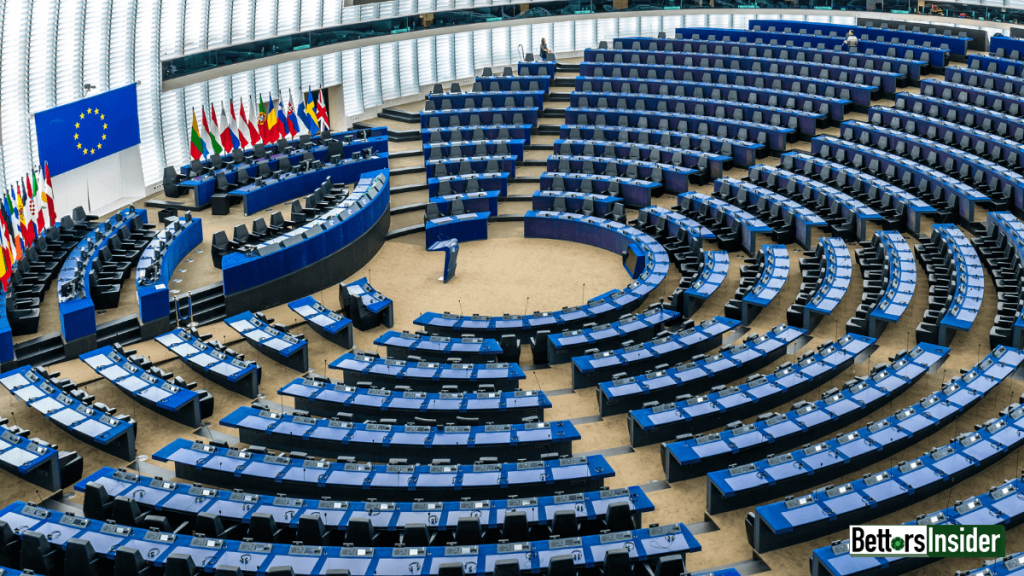

Members of the European Parliament gathered in Strasbourg this week to debate a proposed union-wide levy on online gambling operators as part of ongoing negotiations over the European Union’s next multi-year budget framework, which covers the period from 2028 to 2034. The proposal, championed by Romanian MEP Victor Negrescu and backed by the Social Democrats grouping in the European Parliament, would impose a one percent levy on online gambling and sports betting revenues across all 27 EU member states. Proponents estimate it could generate between two and four billion euros annually once fully implemented.
The gambling levy is one of several new revenue mechanisms the EU is considering as it prepares a budget that supporters say will need to approach two trillion euros to fund priorities including defense, an aging population, environmental programs, and workforce development in an era of rapid automation. The Commission has proposed several new own-resource instruments, and Parliament has formally urged it to assess additional options, including taxes on digital services, cryptocurrency assets, and online gambling.
The Case For and Against
Negrescu and his supporters frame the levy as both a budgetary tool and a social policy instrument. The argument is that the online gambling industry is a fast-growing, highly digitized, and increasingly cross-border sector that derives significant benefit from the EU’s single market and should therefore contribute proportionally to EU-level social priorities and consumer protection efforts. The Social Democrats have characterized a one percent levy as modest relative to the sector’s growth trajectory.
Industry opposition has been swift and broadly unified. Gambling operators and their trade associations have argued that the sector already pays substantial taxes and licensing fees at the national level across EU member states and that adding a supranational layer of taxation would compound the burden without a clear connection to regulatory oversight responsibilities. There are also constitutional and jurisdictional questions about whether the EU has the authority to impose a sector-specific levy of this kind, given that gambling regulation has historically been treated as a national competency under EU law.
The proposal is at an early stage of the legislative process. The debate in Strasbourg was described as a political test of member state appetite for the concept rather than a formal vote on binding legislation. The Commission has not yet issued a formal impact assessment of the gambling levy specifically, and the proposal would need unanimous or qualified majority approval among member states to advance, making it a complex political negotiation.
Implications for Global Gaming Operators
Major international gambling operators including Flutter Entertainment, which owns FanDuel, Betfair, and Paddy Power, as well as Entain, Bet365, and other companies with significant European revenue bases, would be directly affected by a uniform EU levy. For US-listed companies with European operations, the additional tax burden would represent a direct hit to European segment profitability and could accelerate decisions about market prioritization.
The debate also adds to the broader global narrative of governments turning to the gambling industry as a revenue source amid fiscal pressure. In the United States, several states have raised sports betting tax rates in recent budget cycles, and the tension between prediction markets and state tax frameworks represents a parallel version of the same dynamic. The EU’s willingness to explore a harmonized gambling levy signals that this is not a uniquely American political conversation.
The timeline for any formal proposal, if one emerges, would be tied to the EU’s multiannual financial framework negotiations, which typically conclude one to two years before the start of the new budget cycle. That puts a final decision on the gambling levy question, at the earliest, in 2027 ahead of the 2028 budget start date, assuming the political will to move forward exists among a sufficient number of member states.