
Senators Britt and Blumenthal Introduce Bipartisan GAME Act to Ban Gambling Ads Targeting Minors
U.S. Senators Katie Britt and Richard Blumenthal have introduced bipartisan legislation that would create a federal ban on digital gambling advertisements targeted at people under 18.
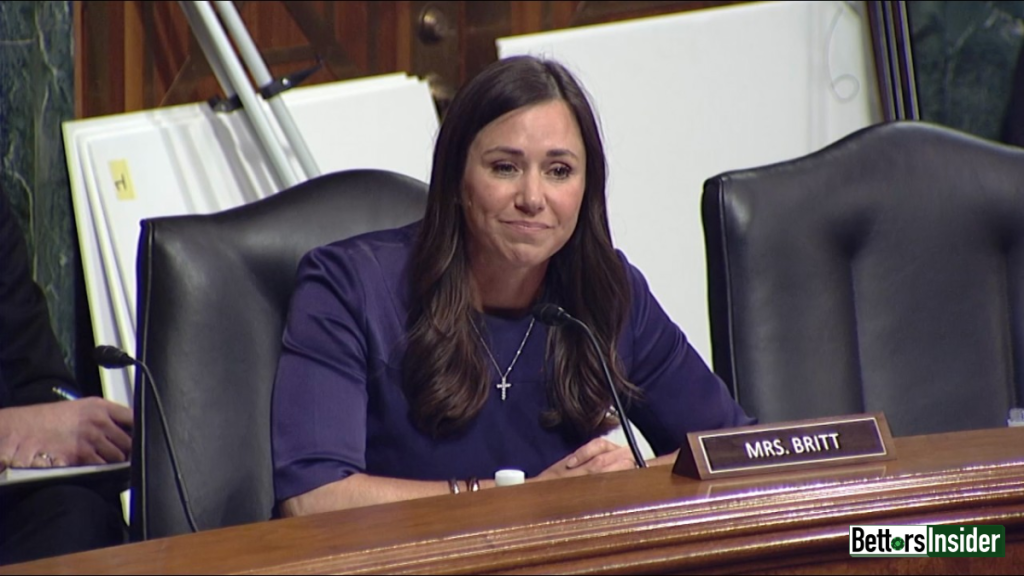

U.S. Senators Katie Britt, a Republican from Alabama, and Richard Blumenthal, a Democrat from Connecticut, have introduced the Gaming Advertisement to Minors Enforcement Act, known as the GAME Act, which would create a federal prohibition on online sports betting advertisements targeted at people under the age of 18. The legislation was introduced as Congress continues to grapple with the rapid growth of sports betting across the country and mounting concern about its reach into younger audiences through social media platforms.
Under the GAME Act, social media companies and other digital advertising platforms would be prohibited from directing gambling ads toward minors. The Federal Trade Commission would be responsible for enforcement, with penalties able to reach up to $100,000 per advertisement shown to a minor. Repeat offenders could be referred to the Department of Justice for additional civil financial penalties. The law would take effect one year after enactment, giving platforms time to update their systems and compliance frameworks.
Why Federal Action Now
Many states and major social media companies already prohibit gambling ads targeting minors, but senators and advocates say those rules are inconsistently enforced and carry insufficient penalties to deter violations. The GAME Act is designed to establish a uniform federal floor with real financial consequences. The bill defines both “minor” and “targeted advertising” clearly, with the latter referring to ads delivered based on personal information, behavioral patterns, or device identifiers, which is how most digital advertising is currently served on platforms like TikTok and Instagram.
The legislation also notably includes prediction markets alongside traditional sportsbooks within its scope, which reflects how Congress is increasingly viewing platforms like Kalshi and Polymarket as functionally similar to regulated gambling for consumer protection purposes. The bill arrives just days before the Senate Commerce Subcommittee is scheduled to hold a hearing on prediction markets and sports betting on May 20, making it part of a broader legislative push to bring federal oversight to an industry that has grown dramatically since the Supreme Court’s 2018 decision in Murphy v. NCAA opened the door to state-level legalization.
Industry Response and What Comes Next
The sports betting industry has generally been responsive to responsible advertising standards, and major operators including DraftKings and FanDuel have their own voluntary commitments around not marketing to minors. However, the GAME Act would codify those obligations into law and create federal enforcement authority that currently does not exist in this space. The bill has bipartisan support, which gives it a better path forward than purely partisan proposals, though passing any standalone piece of legislation through Congress remains a challenging process. The sports betting and prediction market sectors will be watching closely to see whether the GAME Act advances as a standalone bill or gets folded into broader gambling legislation emerging from the Senate this year.