
The Senate Is About to Grill the Sports Betting Industry — Here’s What the May 20 Hearing Is Really About
Senator Marsha Blackburn's 'No Sure Bets' hearing on May 20 will put the AGA, prediction market advocates, and integrity experts in front of Congress to answer for match-fixing scandals and underage betting concerns.
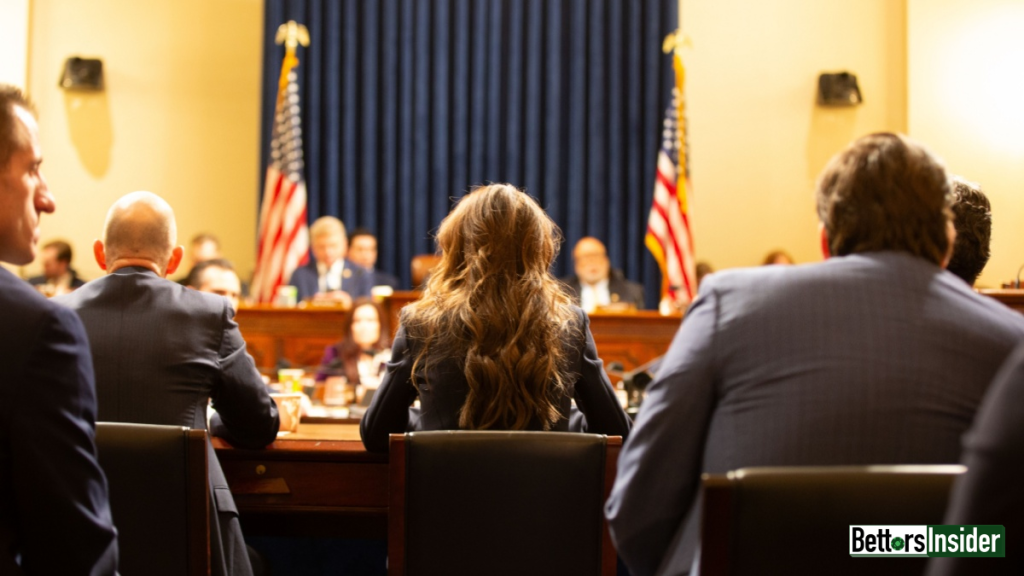

The sports betting industry is about to face its most scrutinized moment in Congress since the Supreme Court opened the door to legalization in 2018. On May 20, the Senate Commerce Subcommittee on Consumer Protection, Technology, and Data Privacy will convene a hearing titled “No Sure Bets: Protecting Sports Integrity in America,” chaired by Senator Marsha Blackburn (R-Tenn.). The hearing will examine whether the current regulatory framework is equipped to handle a $165 billion industry — and what role newer entrants like prediction markets play in that picture.
What Triggered the Hearing
The Commerce Committee announcement points directly to a wave of match-fixing and integrity scandals that have hit professional and college sports in recent years. In one of the more sweeping cases, 20 individuals were indicted for their alleged roles in fixing NCAA basketball games and Chinese Basketball Association games. Prosecutors alleged the scheme involved bribing 39 NCAA athletes across more than 17 Division I programs to underperform in at least 29 games, with bribes ranging from $10,000 to $30,000 per athlete. Miami Heat guard Terry Rozier was separately arrested following a federal investigation into alleged game manipulation tied to an illegal sports betting ring. Former NBA coach Chauncey Billups and former player Damon Jones were also arrested in connection with an illegal poker scheme.
Senator Ted Cruz, chairman of the full Commerce Committee, framed the stakes plainly: “Fans shouldn’t have to wonder if their favorite player missed a buzzer-beater or dropped a touchdown pass because of a secret bet.” Blackburn echoed that sentiment, noting the need to address “the growing exposure of young people and children to betting platforms” alongside the match-fixing concerns.
Who Is Testifying and What They Represent
The witness list offers a clear read on what the subcommittee actually wants to examine. The panel is not assembled to bury the industry — it is assembled to interrogate it. Four witnesses are confirmed, with a possible fifth to be announced later.
Bill Miller, president and CEO of the American Gaming Association, will represent the traditional sportsbook industry. The AGA has consistently argued that legal, regulated sports betting is the best defense against corruption, since licensed operators are required to share data with integrity monitoring systems and report suspicious wagering activity to leagues and law enforcement. Mary Beth Thomas, executive director of the Tennessee Sports Wagering Council, brings a state regulatory perspective and will likely speak to how state frameworks already address some of the issues lawmakers are raising.
Scott Sadin, co-founder and CEO of Integrity Compliance 360, brings a law enforcement and sports integrity angle. His firm works specifically on detection and prevention of match manipulation. The fourth witness is the Honorable Patrick McHenry, former congressman and now senior advisor to the Coalition for Prediction Markets. His inclusion is the most significant signal coming out of the hearing announcement — prediction markets are not being sidelined or treated as a separate issue. They are being invited to the table for a direct conversation about how they intersect with sports integrity. Harry Levant, director of gambling policy at the Public Health Advocacy Institute, was also listed among witnesses, representing consumer protection concerns.
What Lawmakers Are Actually Worried About
Three distinct concerns are running through the hearing framework. The first is match-fixing and insider information abuse, which the Commerce Committee announcement cited as having already “tarnished numerous American sports leagues, including the NBA, MLB, UFC, MLS, and the NCAA.” The volume of legal wagering has created both the motive and the opportunity for manipulation at a scale that was never possible when sports betting was confined to Nevada.
The second concern is underage access. Legal sports betting apps and prediction market platforms are accessible on smartphones, and the subcommittee has flagged the “growing exposure of young people and children to betting platforms” as a specific area of inquiry. Age verification requirements vary considerably across states, and there is no federal standard.
The third and most structurally complex concern is whether prediction markets — which allow users to trade contracts on the outcomes of real events, including sports results — belong under the same regulatory umbrella as traditional sportsbooks, or whether they occupy a different category entirely. The CFTC has asserted exclusive jurisdiction over prediction markets as regulated derivatives exchanges, creating a parallel regulatory track that does not map neatly onto state-level sports betting frameworks.
What This Hearing Is Not
A Senate subcommittee hearing is not legislation. Nothing enforceable will come out of May 20 on its own. The more realistic outcomes include a push for clearer data-sharing standards between platforms and sports leagues, pressure on the industry to strengthen age-verification processes, and potentially the beginning of a federal framework discussion for how prediction markets are classified and overseen.
This is the second time the Senate has formally examined sports betting since the Supreme Court struck down the Professional and Amateur Sports Protection Act in 2018. The first was a December 2024 Judiciary Committee session that debated whether federal oversight was needed alongside state-level regulation. That session produced no legislation. This one is more targeted — and the inclusion of prediction market representation makes it a broader conversation about what the American sports betting landscape actually looks like in 2026. For anyone tracking the future of prediction markets vs. sports betting, May 20 is a date worth watching closely.