
Warren Buffett Just Called Prediction Markets Gambling, Not Investing — And He’s Not Wrong
At Berkshire Hathaway's annual meeting, Warren Buffett went on record dismissing prediction markets as gambling dressed up in financial language — and pointed to a real insider trading case to back it up.
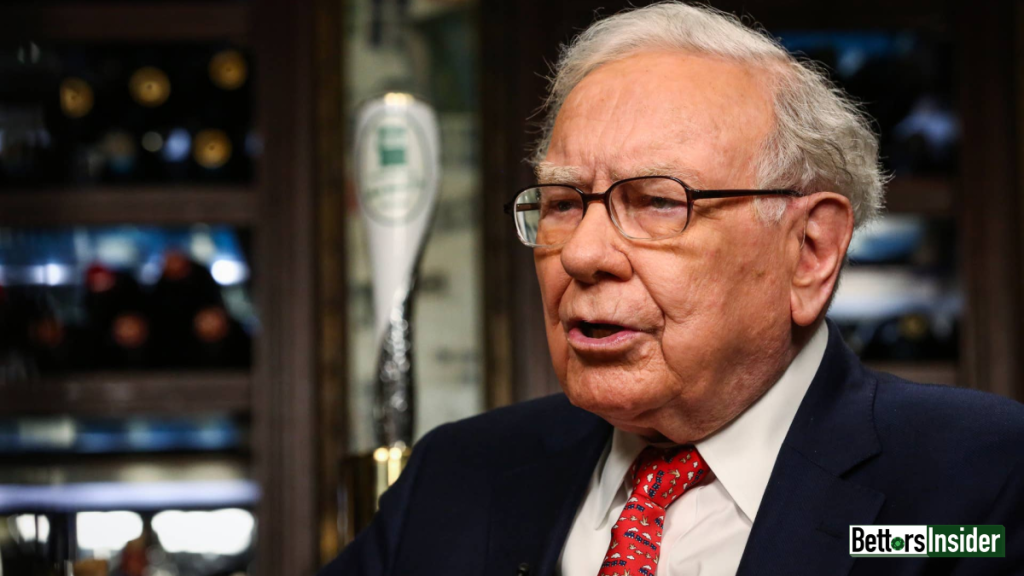

Warren Buffett has never been one to mince words, and at Berkshire Hathaway\u2019s annual shareholders meeting on May 3, 2025, he trained his sights squarely on prediction markets. In a candid interview with CNBC held on the sidelines of the Omaha gathering, the Oracle of Omaha drew a hard line between investing and what he described as the gambling frenzy sweeping financial markets \u2014 and prediction markets landed squarely on the wrong side of that line.
What Buffett Said, Exactly
Buffett\u2019s remarks were blunt and direct. Discussing one-day options and the broader culture of short-term speculation, he told CNBC: \u201cIf you\u2019re buying one-day options or selling them, I mean, that\u2019s not investing, it\u2019s not speculating \u2014 it\u2019s gambling, just totally.\u201d He went further, invoking his long-standing metaphor for the financial system to describe the current moment: \u201cCapitalism in the United States has succeeded like nothing you\u2019ve ever seen, but it\u2019s got this massive casino attached.\u201d And right now, he warned, that casino has never been more attractive.
\u201cWe\u2019ve never had people in a more gambling mood than now,\u201d Buffett said. \u201cBut that doesn\u2019t mean that investing is terrible. It does mean that prices for an awful lot of things will look very silly.\u201d
Prediction Markets as a Case Study
Buffett did not confine his critique to one-day options. He pointed directly to prediction markets as evidence of a broader problem, using a real-world scandal to underscore his point. He referenced the case of a U.S. Army special forces soldier who was charged by the Justice Department with insider trading after making roughly $400,000 on a prediction market. The soldier had advance knowledge of the Trump administration\u2019s clandestine operation to capture Venezuelan President Nicolas Maduro and placed bets accordingly. For Buffett, that story was not just a legal curiosity \u2014 it was a symptom of what happens when financial instruments are structured more like casino games than investment vehicles.
\u201cNobody can explain why they\u2019re buying an option for one day,\u201d Buffett said. The argument extends naturally to prediction markets, where contracts on real-world events \u2014 elections, economic indicators, geopolitical developments \u2014 are bought and sold by millions of users in ways that, to Buffett, look indistinguishable from wagering.
Platforms like Kalshi, which reports roughly 5 million accounts, and Polymarket, with an estimated 2.3 million accounts, have grown dramatically in recent years. Both companies position their products as federally regulated derivatives, not gambling, a distinction they\u2019ve fought hard to preserve in regulatory battles with the CFTC and in court. Buffett\u2019s comments suggest he finds that framing unconvincing. If anything, his remarks validate what critics of the industry have argued for years: that calling a bet a \u201ccontract\u201d does not change its fundamental nature.
The Broader Gambling Culture Concern
The prediction market comments came within a larger warning Buffett issued about the state of financial markets overall. He expressed concern that everyday participants \u2014 retail traders, sports bettors, casual investors \u2014 are increasingly operating with a gambling mindset rather than an investment one. The proliferation of short-duration products, from one-day options to same-day sports betting to political event contracts, has created an environment where immediate gratification dominates long-term thinking.
Buffett, who turned 94 last year and announced at this same meeting that he would be stepping down as Berkshire\u2019s CEO by the end of 2025 with Greg Abel taking over, reiterated advice he has given for decades: the right time to buy is when markets are collapsing and nobody else wants to pick up the phone. The gambling mood of the current moment, he suggested, is precisely the kind of environment that sets up future regret for those caught up in it.
Why This Matters for the Prediction Market Industry
Buffett\u2019s endorsement of almost anything tends to move markets and shape public opinion. His condemnation carries similar weight. For an industry that has spent the better part of three years fighting for legitimacy \u2014 winning a major CFTC court battle, expanding into sports and entertainment contracts, and landing distribution deals with mainstream financial platforms \u2014 having the world\u2019s most famous value investor publicly classify prediction markets as gambling is a reputational setback, even if it carries no regulatory consequence on its own.
The insider trading case Buffett cited is also likely to draw more scrutiny to how prediction platforms handle information asymmetry. When college and professional athletes have already been caught trying to manipulate prediction markets, as Buffett noted, and when military personnel are now facing federal charges for exploiting classified information to trade on them, the argument that these platforms are sophisticated financial instruments becomes harder to sustain publicly.
For bettors and traders who use prediction market apps, Buffett\u2019s comments are a reminder that the regulatory and reputational environment surrounding these platforms remains unsettled. And for anyone curious about whether prediction markets are legal in the U.S., the answer is still evolving \u2014 even as the Oracle of Omaha has made clear where he stands on what they actually are.