
Damon Jones Becomes First to Plead Guilty in NBA Gambling Conspiracy
The former NBA champion and assistant coach entered guilty pleas to two wire fraud counts on April 28, becoming the first domino to fall in a sweeping federal gambling case.
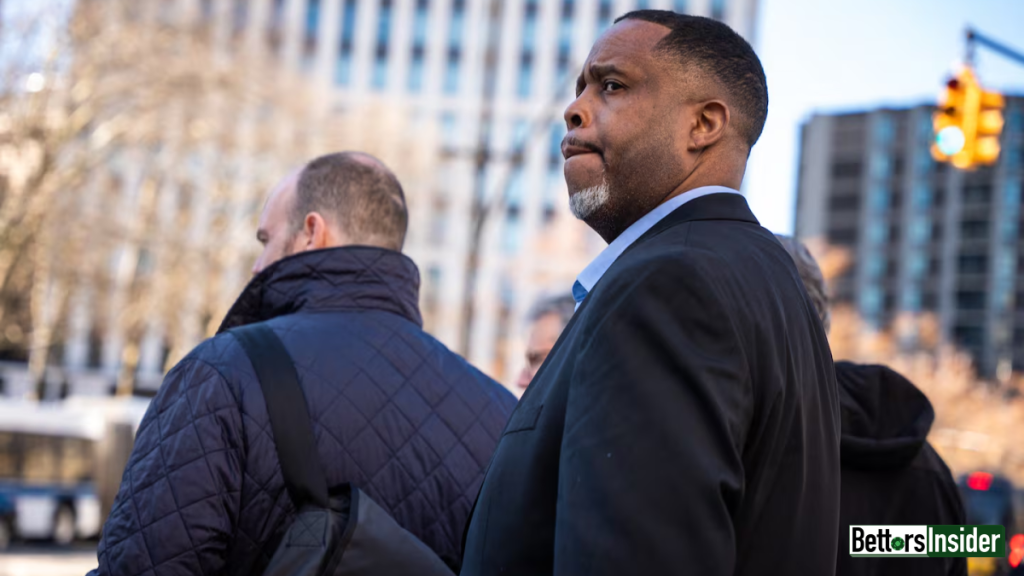

When federal prosecutors unsealed two sprawling indictments in October 2025, the NBA world was shaken. Thirty-four people were charged across cases involving insider sports betting and a sophisticated rigged poker operation tied to organized crime. On April 28, 2026, in a federal courthouse in Brooklyn, the first of those defendants blinked. Former NBA player and assistant coach Damon Jones entered guilty pleas to two counts of conspiracy to commit wire fraud, making him the first person to resolve charges in what investigators have described as a historic corruption scheme.
Who Is Damon Jones
Jones, 49, is a Galveston, Texas native who played college basketball at the University of Houston before going undrafted in the 1997 NBA Draft. He persisted and carved out an 11-year professional career spanning 10 teams, earning his only extended stay with the Cleveland Cavaliers from 2005 to 2008 after signing a four-year, $16.1 million contract. His best statistical season came in 2004-05 with the Miami Heat, when he shot 43.2 percent from three-point range and averaged 11.6 points per game.
After retiring as a player in 2012, Jones transitioned to coaching. He joined the Cavaliers staff as a shooting consultant in 2014 and was elevated to full-time assistant coach in September 2016, a role he held through the 2017-18 season. That stint included the franchise’s 2016 NBA championship, when Cleveland overcame a 3-1 deficit to defeat the Golden State Warriors. During the 2022-23 season, Jones served in an unofficial assistant capacity with the Los Angeles Lakers, a connection that would become central to the federal investigation against him.
What Jones Admitted In Court
During back-to-back hearings in Brooklyn on April 28, Jones read prepared statements acknowledging guilt in both the sports betting and poker cases. In the sports betting case, he admitted that he conspired with others to defraud licensed sportsbooks by using “insider information that I obtained as a result of my relationships as a former player.” That conspiracy ran from December 2022 through March 2024. Prosecutors allege Jones leveraged his proximity to the Lakers to provide co-conspirators with non-public injury information about LeBron James and Anthony Davis, allowing them to bet against the Lakers before those absences became public knowledge. James has not been accused of any wrongdoing.
In the poker case, Jones admitted he was paid to serve as a “face card” at high-stakes games held in Miami and the Hamptons. His NBA celebrity was used to lure wealthy, unsuspecting players to the table. He stated in court that, based on conversations with co-conspirators before and after the games, he knew the games were rigged. The operation used altered shuffling machines that could read cards and relay information to an off-site operator, hidden cameras, special contact lenses capable of reading pre-marked cards, and X-ray tables that revealed face-down cards. The poker scheme funneled proceeds to members and associates of the Gambino, Genovese, and Bonanno crime families, who organized the games and enforced debt collection. Victims were defrauded out of more than $9.5 million.
Jones agreed to forfeit a total of $73,000 across the two cases. He faces a sentencing range of 21 to 27 months in the sports betting matter and 48 to 63 months in the poker case after prosecutors agreed to subtract 15 months from the applicable guidelines in exchange for his plea. Sentencing in the sports betting case is scheduled for January 6, 2027, before Judge LaShann DeArcy Hall.
The Broader Case and What Comes Next
Jones was one of three defendants charged in both indictments. The others are Eric Ernest and Shane Hennon. Also arrested in October 2025 were Portland Trail Blazers head coach Chauncey Billups, who was named as a “face card” in the poker scheme, and Miami Heat guard Terry Rozier, who was charged in the sports betting conspiracy. Rozier has since filed a motion to dismiss, with his attorneys arguing the wire fraud theory is built on a legal framework the Supreme Court has already rejected. Billups has pleaded not guilty.
Jones’s attorney, Kenneth Montgomery, told ABC News after the change-of-plea hearing was announced that his client “is not cooperating” with the government. That statement is notable. When defendants become the first to plead guilty in a multi-defendant case without a cooperation agreement, it can signal different things: they may simply recognize the evidence against them is overwhelming, or they may be negotiating behind the scenes in ways not yet made public. Either way, federal prosecutors typically use early pleas to accelerate pressure on remaining defendants.
The case carries significant implications for the sports betting industry. The insider information scheme exploited the intimate access that players, coaches, and team personnel have to injury information that sportsbooks and the betting public do not. The NBA’s code of conduct explicitly prohibits such conduct, and Jones acknowledged violating it in open court. As legal sports betting continues to expand across the United States, the NBA and other leagues face mounting pressure to implement more robust monitoring systems capable of detecting unusual wagering patterns before bad actors can profit. Several leagues have already signed official data and integrity agreements with sportsbooks, and this case illustrates exactly why those partnerships exist.
With Billups, Rozier, and more than two dozen other defendants still working through the legal process, the NBA gambling conspiracy is far from over. Jones’s guilty plea is the first domino. Whether it prompts others to follow or emboldens those fighting the charges remains to be seen, but the government has shown it is willing to pursue this case at the highest levels of the sport.