
The Hell We Did 2026 Preakness Stakes: Why This 15-1 Longshot Is the Most Intriguing Horse in the Field
Todd Fincher's lightly raced son of Authentic ships into the 2026 Preakness Stakes as one of the most intriguing longshots in the field — elite bloodlines, a near-miss in his first two-turn race, and weeks on the track before any other horse arrived.
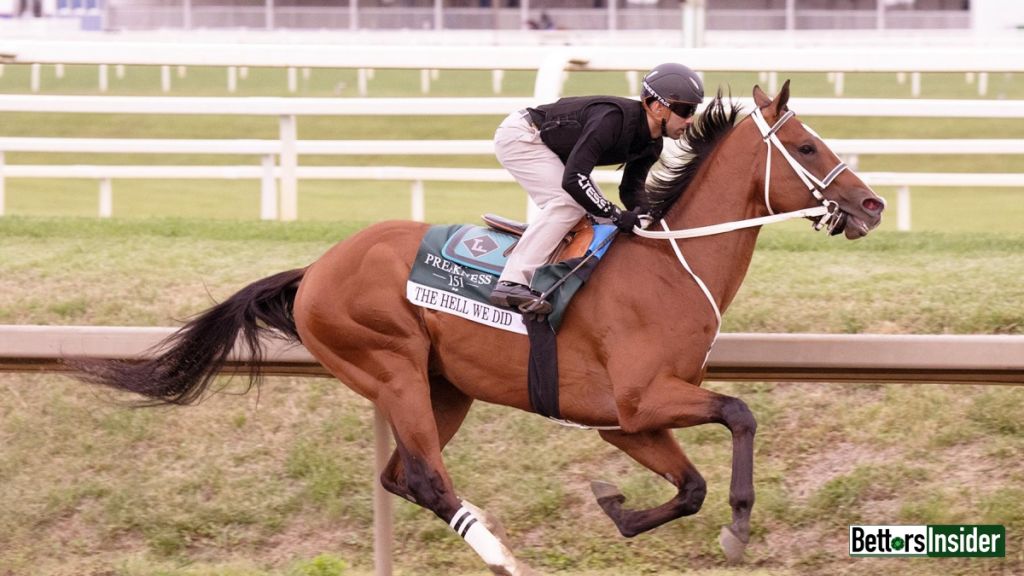

There are longshots, and then there are horses that make you think twice. At 15-1, The Hell We Did fits squarely in the second category. In a Preakness Stakes field loaded with more experienced contenders, this lightly raced son of Authentic brings something almost none of the others can claim: elite bloodlines, a trainer with a track record of doing exactly this, a jockey who belongs at any level, and a résumé so short that nobody really knows his ceiling. That combination of upside and value makes him the most intriguing play on the board for the 2026 Preakness Stakes.

The Bloodlines Tell a Story
Start with the sire. Authentic won the 2020 Kentucky Derby under Luis Saez — the same jockey who will be in the irons for The Hell We Did on Saturday. He finished second in that year’s Preakness. Now his son lines up in the same race, with the same pilot, chasing a result his father couldn’t quite get. That kind of symmetry doesn’t happen often, and it’s hard to ignore.
The dam side adds another layer. The Hell We Did is a half-brother to Senor Buscador, winner of the Saudi Cup G1, and Runaway Ghost, winner of the Sunland Derby G3. Both horses were trained by Todd Fincher. Both won at two-turn distances — exactly what the Preakness demands. The family has already shown it can produce horses who fire at the highest level when the distance stretches out. The Hell We Did may be the best of the bunch.
Todd Fincher Has Done This Before
Fincher operates out of New Mexico, a smaller circuit that doesn’t always produce Preakness-caliber horses. But he has a pattern: develop a horse quietly, point him toward a graded event, and let the talent speak for itself. Senor Buscador and Runaway Ghost are proof it’s not luck — it’s a process. And The Hell We Did is the next horse coming off that assembly line.
What makes Fincher’s approach here particularly interesting is the decision to ship to Laurel on April 28 — before entries were even set for the race. The Hell We Did was the first horse on the grounds for the Preakness. Fincher called it an advantage, and he’s right. While other horses scramble to adjust in the days before the race, this one has been working on the Pimlico surface at Laurel for weeks. He knows the track. That edge is real, even if it doesn’t show up in the numbers.
A Career Arc That Points Forward
Four starts. Two wins. Two seconds. On the surface, that reads like a horse still finding his footing. Look closer and you see a different picture.
The Hell We Did broke his maiden impressively at Remington Park in October 2025. He finished second in the Zia Park Juvenile in November, showing he could compete in a field of better juveniles. Then came his three-year-old debut at Sunland Park in mid-March 2026 — a wire-to-wire allowance win by 13 lengths. Dominant is an understatement. That performance put Fincher’s camp on high alert and pointed them toward a graded stakes target.
That target was the Lexington Stakes (G3) at Keeneland on April 11. It was The Hell We Did’s first race around two turns, and he ran like a horse who hadn’t read the script. He tracked just off the pace behind Corona de Oro, swept past him in the stretch, and held a clear lead late — only to be caught at the wire by Trendsetter at 32-1. He finished second. It was a race that could have gone either way.
Fincher wasn’t discouraged. “He ran a good race,” he said afterward. “He’d never even had a mile race under his belt… we expect a big jump.” That’s not trainer spin. A horse who nearly won his first two-turn race at a graded stakes level has legitimate room to improve as that experience sets in. The Preakness is his second two-turn start. The jump Fincher is talking about is entirely plausible.
Why the Post and the Field Set Up Well
Post 7 is ideal in a 14-horse field. Dead center of the draw, The Hell We Did gets a clean trip out of the gate without the trouble that can come from an extreme outside or inside post. Luis Saez will be able to stalk the pace or press it, depending on how the race develops — the same tactical flexibility that nearly got them the Lexington.
The field sets up in a way that suits a horse with stamina and late energy. Napoleon Solo has enough speed to push the pace hard from Post 10. Iron Honor, the morning-line favorite, prefers to sit just off it. Taj Mahal is undefeated but hasn’t faced a field like this. There’s enough pace in the race that a horse who can sit mid-pack and fire late has a clear path to the wire. That’s exactly how The Hell We Did wants to run.
The Case at 15-1
Is The Hell We Did a guaranteed winner? No. He’s only made four career starts, hasn’t won a graded race, and was caught at the wire by a 32-1 shot in his last outing. The skeptics have a case. But horse racing at the Triple Crown level rarely rewards certainty. It rewards horses who are moving forward, running a race that fits their style, and hitting a track they know — all of which apply here.
At 15-1, the price reflects the skepticism. But for bettors willing to look beyond the morning-line favorites, The Hell We Did offers something rare: an elite pedigree on both sides, a trainer who has engineered this exact scenario before, a jockey who won the Kentucky Derby on his father, and a horse who is still figuring out just how good he can be. If you’re looking to get involved in the 2026 Preakness Stakes, the FanDuel Promo Code and DraftKings Promo Code pages have current offers worth checking before race day. However you play it, The Hell We Did deserves to be part of the conversation.