
Red Rock Resorts Just Posted Record Q1 Net Revenue — What It Says About Las Vegas Locals vs. Strip Tourism
Red Rock Resorts posted record Q1 2026 net revenue of $507.3M but EBITDA declined 1.2%. The revenue-profitability divergence reveals how Las Vegas locals-focused casinos are navigating a two-speed market.
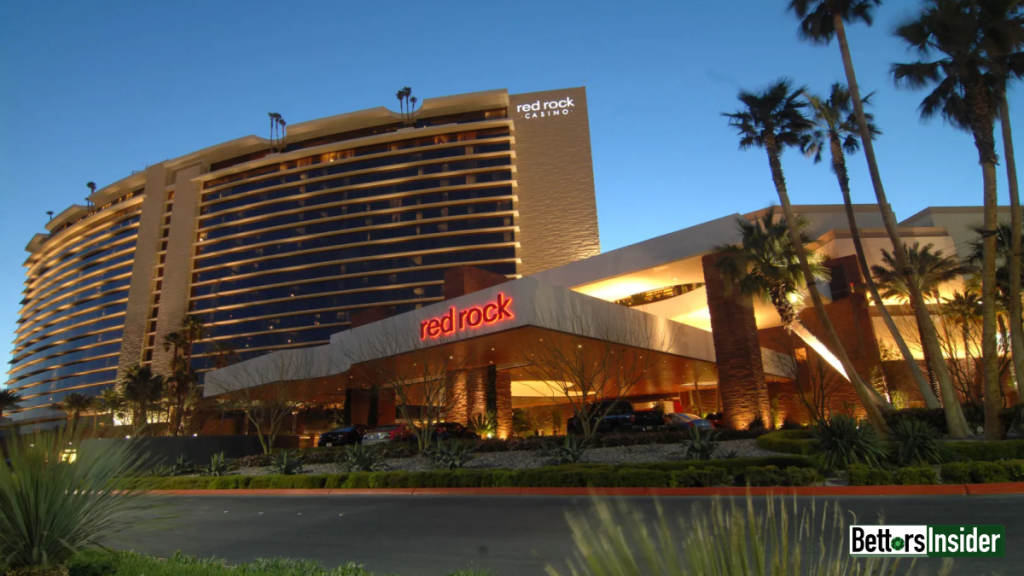

Red Rock Resorts reported first-quarter 2026 results on April 29 that tell a more nuanced story than the headline revenue number suggests. Consolidated net revenue came in at $507.3 million, an increase of 1.9% from $497.9 million in the same period of 2025 — the highest first-quarter net revenue in the company’s history. But Adjusted EBITDA declined 1.2% year-over-year to $212.6 million, and net income fell 3.8% to $82.7 million. Revenue records alongside declining profitability is a combination that demands explanation, and the explanation reveals something important about the current state of the Las Vegas economy.
The Revenue Record in Detail
Red Rock Resorts, which operates Station Casinos properties across the Las Vegas Valley, derives almost all of its revenue from Las Vegas operations. In Q1 2026, Las Vegas segment net revenue was $499.5 million, up 0.9% from $495 million in Q1 2025. The company’s CFO Stephen Cootey described this as the highest first-quarter gaming revenue in company history, supported by strong casino slot play, robust spending per visit, and continued momentum from the Durango Casino and Resort property, which underwent a significant expansion in late 2025 adding more than 25,000 square feet of casino space and a new premium high-limit slot area. Non-gaming segments also performed well, with food and beverage delivering its second-best first-quarter revenue in company history.
On the EBITDA side, however, Las Vegas operations posted $232.4 million, down 1.5% from $235.9 million in Q1 2025. The adjusted EBITDA margin for Las Vegas operations was 46.5%, a decline of 113 basis points year-over-year. Cootey attributed much of that margin compression to hotel room disruption at Green Valley Ranch, where an East Tower renovation was underway. He noted that if the lost room nights at Green Valley Ranch were excluded, the picture would look more favorable, and suggested the hotel renovation impact alone accounted for roughly half the margin degradation. Elevated utilities costs and some one-time write-downs were additional headwinds in the quarter.
What the Locals Market Is Telling Us
Red Rock Resorts is not a Strip operator. Station Casinos properties are neighborhood casinos built for Las Vegas residents — the locals who live in the suburbs of Henderson, Summerlin, and the western valley and who drive to their nearby casino rather than booking a hotel on the Strip. This is a fundamentally different customer base from the tourists and conventioneers who fill Bellagio or Caesars Palace, and the divergence between these two segments is one of the more interesting dynamics in the current Las Vegas economy.
The locals market has been remarkably resilient. Red Rock has now maintained Las Vegas operations adjusted EBITDA margins above 45% for 21 of the last 23 quarters — a consistency that few publicly traded casino operators can match anywhere. The core drivers are straightforward: lower labor costs than Strip resorts, no convention or hotel dependency, and a customer base whose entertainment spending is relatively insulated from macro volatility compared to discretionary travel budgets. When airfares rise, hotel rates increase, and convention calendars thin out, the Strip visitor counts decline. When those things happen, many Strip-adjacent Las Vegas residents are still driving five minutes to a local casino to play slots and have dinner.
That said, the gap between revenue growth and EBITDA growth in Q1 2026 points to real cost pressure. Selling, general and administrative expenses rose to $114.4 million from $104.7 million in Q1 2025 — an increase of more than 9%. Payroll growth of approximately 3% was in line with valley-wide costs, but total SGA growth significantly exceeded revenue growth, which is the primary driver of margin pressure. Construction disruption at Durango, Sunset Station, and Green Valley Ranch affected operations in ways management expects to be temporary. Players in online casino markets may not track Red Rock closely, but the company’s financial health is a useful proxy for the health of the Las Vegas locals consumer.
What It Means for Operators and Regional Markets
Red Rock’s Q1 results, read alongside Strip operator results from the same period, point to a two-speed Las Vegas economy. Strip properties are navigating softness in international tourism and some moderation in high-end spending, while locals operators are holding margins through operational discipline and property investment. Durango, in particular, continues to exceed expectations since its 2023 opening, and the planned Durango North expansion is positioned to capture more than 6,000 new households expected within a three-mile radius over the next several years.
For regional gaming operators outside Las Vegas, the Red Rock model is worth studying. The company’s success is built on the principle that a well-executed, conveniently located property serving a defined local customer base can sustain exceptional margins over time. That model has applicability in regional markets across the US — provided operators invest in their product rather than treating regional casinos as mature cash cows. The Q2 outlook from management was described as stable in terms of core slot and table business, with continued near-term construction disruption expected to moderate as projects are completed. The fundamentals of the locals market remain intact, even if this particular quarter showed the strain of managing multiple simultaneous capital projects.