
Washington D.C. Just Introduced a Bill to Legalize Online Casinos — and Ban Sweepstakes Sites at the Same Time
DC Councilmember Wendell Felder filed B26-0656 on April 9, pairing iGaming legalization with an explicit ban on the sweepstakes casino model — a rare double move with a hearing set for May 4.
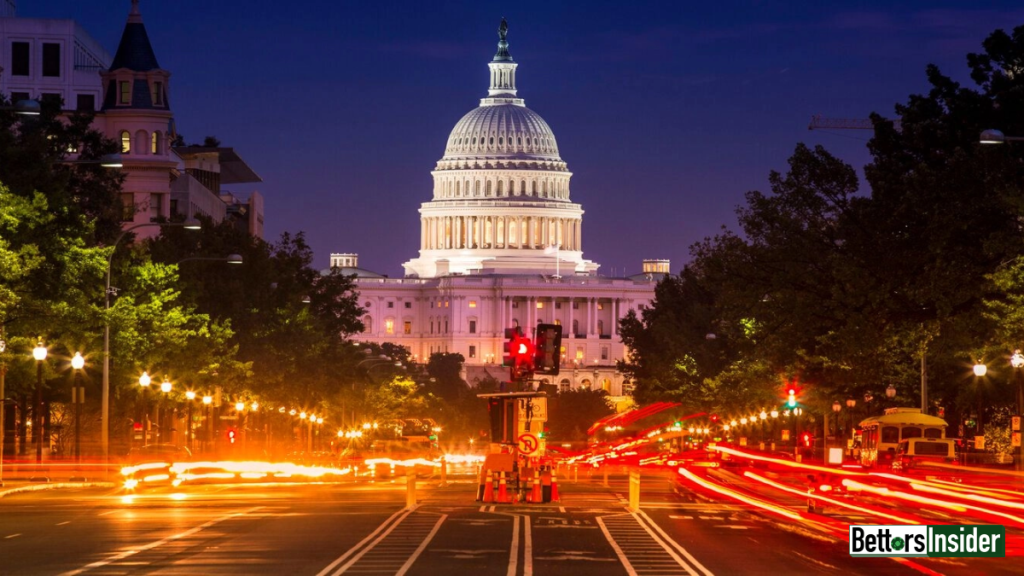

Washington, D.C. is making a bold double move on online gambling: a new bill would simultaneously legalize real-money internet casinos and outlaw the sweepstakes casino model that has proliferated across the country. If it passes, the District would become one of the few jurisdictions in the country to take both steps at once — and one of the most aggressive in dealing with the unregulated gray market.
What B26-0656 Actually Does
Councilmember Wendell Felder (D-Ward 7) filed B26-0656, the Internet Gaming and Consumer Protection Act of 2026, with the Office of the Secretary of the Council of the District of Columbia on April 9. The bill assigns regulatory authority to the Office of Lottery and Gaming and would allow operators to offer slots, poker, and table games online to District residents. The minimum age would be 21. A committee hearing is scheduled for May 4.
The financial structure is straightforward: a 25% tax on gross gaming revenue, a $2 million initial licensing fee valid for five years, and $500,000 renewal fees. There is no cap on the number of licenses that could be issued, though the bill gives preference to operators already holding a DC sports betting license — meaning FanDuel, DraftKings, and BetMGM are positioned to receive expedited consideration. DC has had legalized mobile sports betting since 2019, and five licensed operators are currently active following the departure of Penn Entertainment-owned theScore Bet in late February.
Felder has been direct about the motivation. “This bill reflects a practical, data-informed approach to strengthening consumer protections, modernizing our gaming framework, and capturing revenue that is currently flowing outside of the District’s oversight,” he said in the bill’s introduction. National estimates suggest that Americans wager hundreds of billions of dollars annually on unlicensed platforms, with a significant portion of that revenue bypassing state tax systems. District-specific estimates put unlicensed wagers by DC residents at approximately $700 million in 2024 alone.
The Sweepstakes Ban Is the Bigger Story
The legalization component of B26-0656 is almost conventional at this point — iGaming bills have been introduced in states from Virginia to Massachusetts to Maryland during this legislative cycle. What makes the DC bill unusual is how explicitly it goes after the sweepstakes casino model at the same time.
The bill defines “sweepstakes gaming” broadly as any game or promotional scheme where a person provides money or something of value, directly or indirectly, for the chance to participate in casino-style games and win prizes. The definition explicitly includes dual-currency gaming products — the model used by sweepstakes casinos, which allow players to purchase Gold Coins while distributing Sweeps Coins that can be redeemed for cash. Subscription models are also captured. Violations would carry civil fines of up to $100,000 per instance, or $500,000 for repeat violations. The Attorney General of the District of Columbia would have the authority to pursue injunctive relief, civil penalties, restitution, and disgorgement of profits against non-compliant operators.
That enforcement mechanism is meaningful. The combination of cease-and-desist power for the Office of Lottery and Gaming and civil litigation authority for the AG creates real financial exposure for sweepstakes platforms that continue operating in the District after a ban takes effect.
The Broader Legislative Context
DC is entering this debate at a moment when the sweepstakes casino industry is under unprecedented pressure. California banned sweepstakes casinos effective January 1, 2026, removing roughly 20% of the industry’s US revenue in a single law. Indiana, Connecticut, Montana, New Jersey, New York, and Maine have also enacted bans. Active legislation is advancing in Florida, Oklahoma, Tennessee, Minnesota, Louisiana, and Maryland. The DC bill fits a clear national pattern.
What distinguishes the DC approach is the explicit coupling of legalization with prohibition. Felder’s framing acknowledges that the underlying consumer demand is real and is not going away — the question is whether it flows to licensed, taxed operators or continues to fund unregulated platforms operating outside state oversight. The argument is essentially the same one that drove states to legalize sports betting after PASPA was overturned in 2018: regulation beats prohibition.
“Inaction carries real consequences,” Felder wrote in the bill introduction. “Without a legal framework, revenue continues to flow to unregulated operators, consumers remain exposed to risk, and the District falls behind neighboring jurisdictions that are moving forward.”
What Happens Next
The bill was initially assigned to the Committee on Human Services. A hearing is scheduled for May 4, giving stakeholders a formal venue to weigh in. The DC Council operates year-round, which removes some of the session-deadline pressure that has killed similar bills in other states. That said, iGaming legalization remains a heavy legislative lift. Similar bills in Virginia, Massachusetts, and Maryland have struggled or failed in recent cycles. DC’s compact geography and existing regulatory infrastructure for sports betting may make the path somewhat cleaner — but the sweepstakes ban component will likely attract opposition from platforms that currently serve District residents legally.
For the licensed sportsbook operators already in DC, the bill represents potential upside in two directions: a new revenue category through iGaming, and the elimination of an unregulated competitor. That alignment of interests between the government and established operators is a dynamic that has helped iGaming bills advance in other states, and it may do the same here.