
Wisconsin Becomes the 33rd State to Legalize Online Sports Betting — But Don’t Expect DraftKings or FanDuel to Show Up
Wisconsin Gov. Tony Evers signed Assembly Bill 601 into law, making the state the 33rd to legalize online sports betting. The catch: a tribal-only model with 60% revenue sharing may keep DraftKings, FanDuel, and Fanatics on the sidelines.
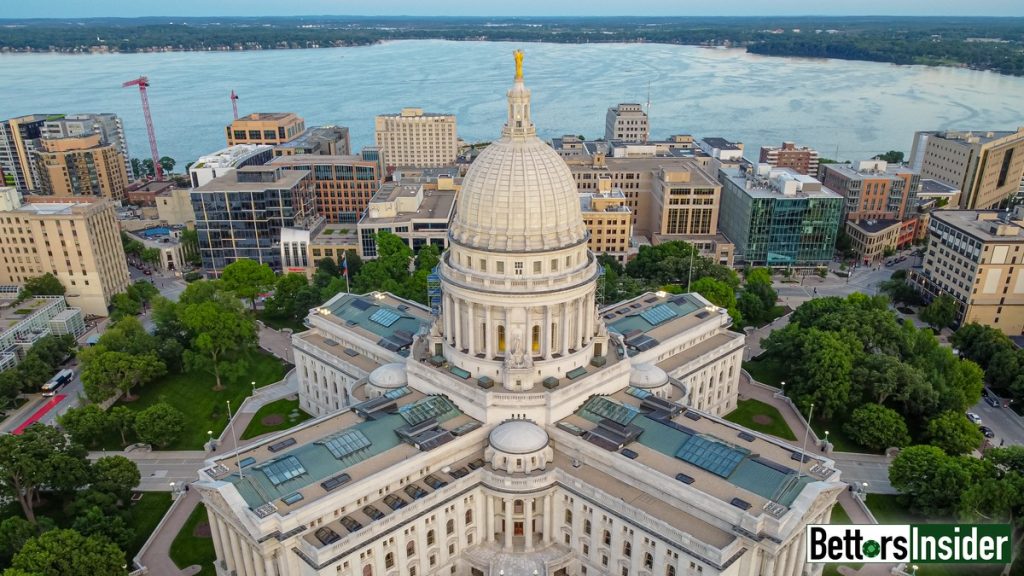

Wisconsin Gov. Tony Evers signed Assembly Bill 601 into law last week, paving the way for statewide online sports betting in the Badger State. The signing makes Wisconsin the 33rd state to legalize mobile wagering, a milestone that would normally trigger a wave of sportsbook app launches within months. This time, the story is more complicated — and for bettors hoping to use DraftKings, FanDuel, or Fanatics, the wait may be considerably longer than usual.
The reason comes down to four letters: IGRA. The Indian Gaming Regulatory Act, the federal law that governs tribal gaming in the United States, requires that a minimum of 60 percent of net gaming revenue be retained by the tribal entity hosting the operation. Wisconsin’s law follows the “hub-and-spoke” model used in Florida, where all bets are processed by servers on tribal land. Every dollar wagered legally in Wisconsin must flow through tribal infrastructure — and that means every commercial sportsbook that wants to operate in the state must hand over at least 60 percent of its revenue to a tribal partner before keeping a cent.
Why the Major Operators Are Pushing Back
The Sports Betting Alliance — the lobbying group representing DraftKings, FanDuel, Fanatics, BetMGM, and Bet365 — spent $262,603 opposing AB 601 and its predecessor bills over the past year. Their argument is straightforward: sports betting is a low-margin, capital-intensive business, and surrendering 60 percent or more of revenue to a tribal partner simply does not make economic sense.
“Online sports betting is a low-margin, capital intensive business,” a lobbyist for the major operators wrote in testimony to Wisconsin lawmakers. “It is simply not economically feasible for a commercial operator to hand over 60% or more of its revenue to an in-state gaming entity, just for the right to operate in the state.”
That position has some nuance worth acknowledging. DraftKings and FanDuel both launched in Arkansas recently under a deal that required sharing 51 percent of revenue with their casino partners — a figure that, while steep, they ultimately accepted. The gap between 51 and 60 percent may be less absolute than the lobbying language suggests. But it does illustrate that every additional point of revenue-sharing meaningfully narrows the operators’ viable margins in what is already a competitive market.
How the Hub-and-Spoke Model Works
Wisconsin’s law mirrors the structure Florida adopted for its Hard Rock Bet sportsbook. Under the hub-and-spoke model, bettors across the state can access a sports betting app on their phone or computer, but all wagers are routed through servers physically located on tribal sovereign land before being processed. Federal courts have consistently ruled that this architecture constitutes tribal gaming under IGRA, which is what enables the model’s legal viability.
In Florida, the Seminole Tribe operates Hard Rock Bet exclusively — there are no competing sportsbook brands available to Florida residents. Wisconsin’s law is slightly different: it does not restrict the market to a single tribal app. Multiple tribes could theoretically offer their own platforms, and commercial operators could partner with tribal entities to offer branded apps — provided they accept the revenue-sharing terms. That distinction is meaningful, but the financial calculus still pushes the major operators toward skepticism.
What Happens Next
The signing of AB 601 is a starting point, not a finish line. Wisconsin’s 11 federally recognized tribes must now renegotiate their gaming compacts with the state — a process that requires tribal input, state negotiation, and ultimately federal approval from the Bureau of Indian Affairs before any online sports betting app can legally launch. That compact renegotiation process typically takes months to complete and can run longer if disputes arise among the tribes over revenue distribution or structural terms.
All 11 tribes backed the bill with a joint letter to Gov. Evers asking him to sign it. Their unity on the legislation was a condition Evers sought before acting. But unity on the bill does not guarantee unity on compact terms, and the tribal leaders themselves have acknowledged that the real work starts now. “What I will not accept is a plan that fractures this opportunity into unequal pieces, allowing some tribes to reap great benefits while leaving only crumbs for others,” one tribal leader said publicly following the signing.
The Prediction Market Wrinkle
There is a layer to this story that goes beyond traditional sportsbooks. DraftKings and Fanatics both launched prediction market products in Wisconsin before AB 601 was signed, operating under federal CFTC oversight rather than state gaming law. FanDuel is expected to follow. These prediction market platforms — which offer binary event contracts on sports outcomes — can operate in Wisconsin without tribal approval or the revenue-sharing requirements of state-licensed sports betting.
Wisconsin bettors who want to use a national brand may end up accessing DraftKings or FanDuel through prediction markets rather than traditional sportsbooks, regardless of what happens with AB 601’s implementation. That dynamic is partly what motivated legislators to act in the first place — the desire to establish a regulated framework before prediction markets gained an even deeper foothold in the state.
For now, Wisconsin has online sports betting on paper. Whether Badger State bettors will see a DraftKings or FanDuel app in the near term depends on compact negotiations, tribal decisions, and whether the major operators decide the revenue math pencils out. The safe bet is that it will not happen quickly.