
MLB Proposes Blockbuster Playoff Overhaul as Rob Manfred Faces Lockout Firestorm
MLB's proposed playoff opponent-selection format and 154-game season are sparking fan backlash and colliding with tense CBA talks as commissioner Rob Manfred navigates a looming lockout threat.
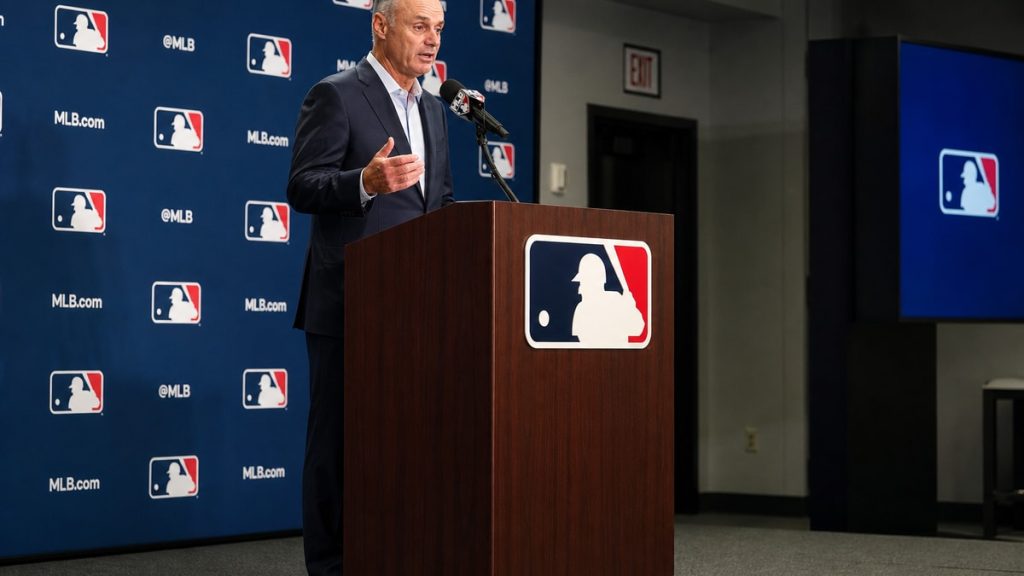

Rob Manfred is at the center of baseball’s biggest controversy of the postseason, and it has nothing to do with a blown call or a late-inning meltdown. On Thursday, word broke that Major League Baseball is pushing a sweeping set of proposed changes for future seasons, including a shortened 154-game schedule, a best-of-seven Division Series, and a radical new wrinkle that would let top playoff seeds hand-pick their opponents. The proposal has ignited backlash across the sport, and it’s landing in the middle of an already tense set of collective bargaining talks between the league and the players’ union.
Manfred, who has served as MLB commissioner since 2015, has spent much of this year steering the sport through one of its most consequential labor negotiations in decades. With the current Basic Agreement set to expire December 1, Manfred and MLB ownership have been negotiating with the MLB Players Association over a potential salary cap system, a fight that has fueled growing speculation of a lockout once the World Series wraps up. The newly revealed playoff and schedule proposals are being presented as part of that broader negotiation, layering a format fight on top of an economic one.
The Opponent-Selection Plan Sparks Dodgers Backlash
According to a league fact sheet, the most eye-catching piece of the proposal would let the No. 3 seed choose between facing the No. 5 or No. 6 seed in the Wild Card round. In the Division Series, the No. 1 seed would get to pick which Wild Card Series winner it wants to face, leaving the No. 2 seed with the remaining opponent. MLB’s reasoning, per the fact sheet, is that opponent selection would “increase the importance of regular season records and generate significant fan engagement while stoking rivalries.” If approved, the changes would begin with the 2027 season.
The backlash has centered heavily on the Los Angeles Dodgers, the two-time defending World Series champions who finished as the No. 2 seed this postseason. Under the proposed system, Los Angeles would not have gotten to choose its own Division Series matchup — that privilege would have belonged to the top-seeded Brewers. Critics argue the defending champs hardly need an easier bracket, and fans have flooded social media arguing the format rewards gamesmanship over simply beating the best teams in front of you. The proposal would also expand the Division Series from five games to seven and bring back a 154-game regular season with a standard off-day built in on Mondays, both long-rumored ideas that are now formally on the table.
A Lockout Threat Looms Over Everything
The format proposal didn’t emerge in a vacuum. It’s surfacing in the thick of CBA negotiations that have grown increasingly contentious, with MLB previously floating major changes to free agency and roster rules back in August. Manfred has publicly acknowledged concern that a salary cap push could trigger a work stoppage reminiscent of the 1994-95 strike that wiped out a World Series, while MLBPA leadership has criticized the league’s economic messaging as overblown. With a lockout now viewed as a near-inevitability once the postseason ends, every operational proposal from the commissioner’s office — including this one — is being read through the lens of that looming fight.
Adding another layer, this postseason itself has undercut one of the league’s own arguments. Lower-revenue clubs like the Rays, Brewers, and White Sox have thrived deep into October, while big-spending rosters like the Yankees were bounced early, swept out of the ALDS by Tampa Bay. That reality has fueled skepticism toward MLB’s parity-based case for a cap, with critics noting that spending power hasn’t guaranteed postseason success this October. As fans track the stretch run, many are also watching the live betting markets shift with each series, a reminder of how closely tied playoff format and postseason unpredictability are to the DraftKings Predictions promo markets tracking these series in real time.
For now, nothing is finalized. The playoff proposal still needs to clear negotiations with the players’ union, and given the swirling backlash — not to mention the specter of a lockout hanging over the entire winter — Manfred may find it prudent to let the format conversation simmer rather than force a vote before the current postseason even concludes. What is clear is that the commissioner’s office is no longer just managing games in October; it’s managing the entire architecture of how the sport will look beginning in 2027, all while trying to avoid becoming the answer to why baseball went dark for a second time in three decades.