
House Republicans Introduce Bill Banning Congress Members and Families From Betting on Prediction Markets
House Administration Committee Chairman Bryan Steil has introduced the Stop Lawmakers From Predicting Act, a bill that would prohibit members of Congress, their spouses, and dependent children from placing bets on prediction markets tied to political outcomes or government policy.
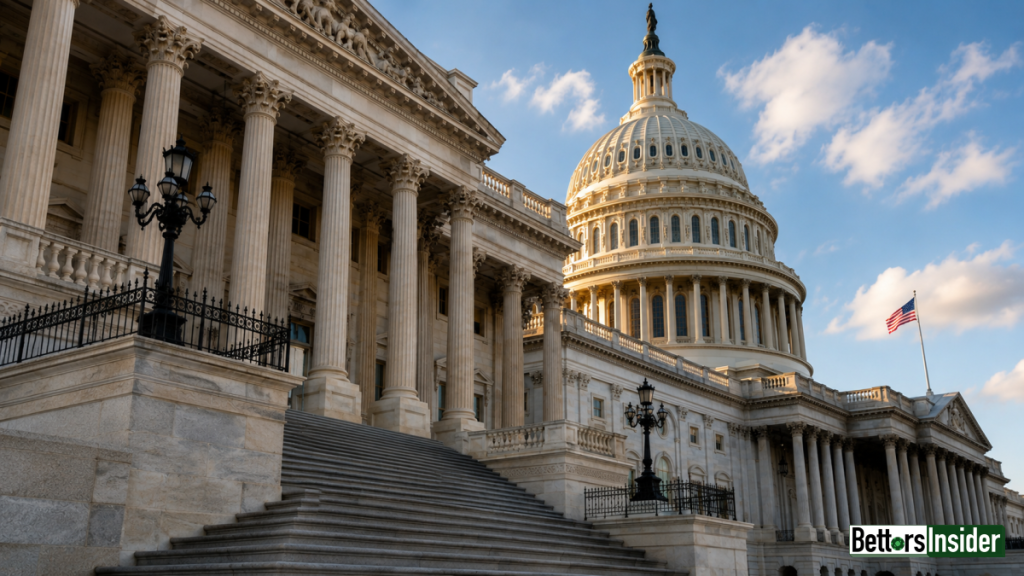

A new piece of federal legislation introduced last week by House Administration Committee Chairman Bryan Steil of Wisconsin would bar members of Congress, their spouses, and their dependent children from using prediction markets to bet on political outcomes, government actions, or events tied to their official duties. The bill, formally titled the Stop Lawmakers From Predicting Act, was introduced on June 18, 2026, and has been referred to the House Administration Committee for consideration. It carries the support of House Speaker Mike Johnson and President Donald Trump, according to Fox Business.
The Stop Lawmakers From Predicting Act would restrict covered individuals from entering into any contract or transaction that hinges on a political outcome, a specific government action, or any event that came to their attention as a direct or indirect result of their congressional service. The restrictions extend beyond members themselves to their immediate family members, closing what some critics have called a potential loophole in narrower insider trading legislation.
Penalties and Enforcement
Violators would face a fine equal to either $2,000 or 10 percent of the value of the prohibited transaction, whichever is greater. They would also be required to forfeit any net gains realized from the trade. The bill explicitly bars lawmakers from using their Members’ Representational Allowance, Senate office accounts, or political campaign funds to pay any fines incurred, meaning penalties would have to come from personal funds.
Enforcement would fall to the relevant congressional ethics office, which would also be tasked with issuing interpretive guidance on ambiguous terms in the legislation. Former members who resign or retire before paying their fines could be referred to the Department of Justice for civil enforcement, providing a mechanism for accountability beyond the bounds of active congressional service. The law would take effect 180 days after enactment if it passes both chambers and receives a presidential signature.
Part of a Broader Congressional Movement
The Stop Lawmakers From Predicting Act builds on a series of related legislative actions over the past several months. The Senate passed a resolution in April 2026 that changed the upper chamber’s internal rules to ban senators and their staff from placing prediction market bets. Separately, Senator John Curtis of Utah joined with Representatives from both parties to introduce a broader bill that would extend similar restrictions to all government officials, including the president and vice president.
The parallel activity at the House level, with Steil’s bill adding family member restrictions and a formal financial penalty structure, reflects a widening consensus in Congress that elected officials should not be able to profit from prediction market positions that may be influenced by their official knowledge or decisions. Prediction markets like Kalshi and Polymarket have seen explosive growth in the past year, particularly during World Cup betting and the 2024 and 2026 election cycles, raising the profile of the potential conflict-of-interest issue.
Implications for the Prediction Market Industry
While the Stop Lawmakers From Predicting Act specifically targets elected officials rather than ordinary consumers, its legislative progress could signal broader federal attention to the prediction market space. The industry has already faced pressure from state attorneys general, including a series of lawsuits filed in Kentucky against Kalshi, Polymarket, and VGW targeting their operations in that state. Congressional oversight, even when focused on official conduct, tends to generate increased regulatory scrutiny of the underlying industry as well.
For everyday bettors, platforms like Kalshi and Polymarket remain widely accessible in most U.S. states, and new users can get started through the Kalshi Promo Code and Polymarket Promo Code pages for current welcome offers. The regulatory picture for the broader prediction market space will continue to evolve as Congress and state regulators weigh in on what rules should govern these rapidly growing platforms.