
Elena Rybakina Stunned by Yuliia Starodubtseva in Second Round of Roland Garros 2026
World No. 2 Elena Rybakina was eliminated from the French Open in a massive upset by Ukrainian qualifier Yuliia Starodubtseva, ending the Australian Open champion's Roland Garros campaign in the second round.
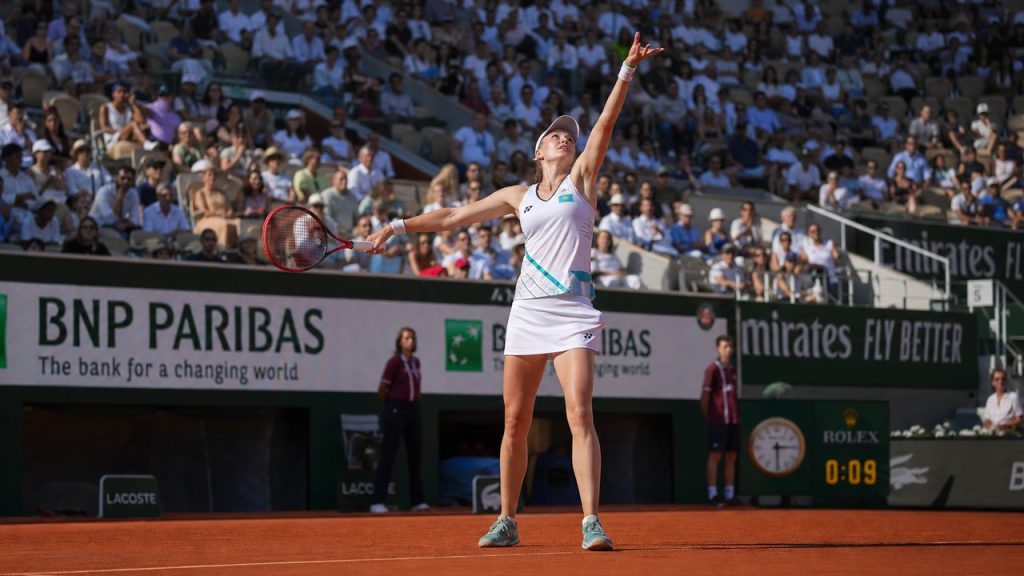

World No. 2 Elena Rybakina’s French Open campaign ended in a stunning second-round upset on Wednesday as Ukrainian qualifier Yuliia Starodubtseva knocked out one of the tournament’s top contenders at Roland Garros. The defeat eliminates Rybakina, a two-time Grand Slam champion and the second seed, in a result that immediately sent shockwaves across the tennis world.
Rybakina entered Roland Garros as one of the most dangerous players in the draw. The 26-year-old Kazakhstani had won the Australian Open title earlier in 2026 to reach a career-high ranking of world No. 2 and arrived in Paris with her best clay-court form of her career. However, Starodubtseva, ranked No. 53 in the world, delivered the best victory of her career to stun the Ice Queen on Court Philippe-Chatrier.
A Career-Best Win for Starodubtseva
Yuliia Starodubtseva, 26, had been a rising name on the WTA Tour but had never before toppled a player of Rybakina’s caliber at a Grand Slam. The Ukrainian turned professional after a college career at Old Dominion University and became the first woman in the Open Era to qualify for all four Grand Slam main draws in a single season back in 2024. Her best prior result at Roland Garros was a third-round run in 2025, where she lost to then-fourth seed Jasmine Paolini.
Starodubtseva reached a career-high ranking of No. 53 in April 2026, and her victory over Rybakina Thursday stands as the biggest scalp of her career — defeating a player ranked 51 spots above her and a reigning Australian Open champion. The Tennis Channel confirmed the result on social media minutes after the match concluded, calling it a “major upset” on the day’s order of play at Roland Garros.
Rybakina’s Struggles on Clay
Despite her dominant serve and powerful groundstrokes, clay has historically been Rybakina’s most challenging surface. Her best French Open result entering this year was a quarterfinal appearance in 2021 and 2024. The 2026 tournament marked a rare window of opportunity for Rybakina: arriving in Paris as Australian Open champion, world No. 2, and WTA Finals winner from late 2025, she had legitimate aspirations of completing a career Golden Slam of major titles. That dream is now on hold for at least another year.
Born in Moscow in 1999, Rybakina switched her sporting federation from Russia to Kazakhstan in 2018 and went on to win Wimbledon in 2022 — becoming the first Kazakhstani player to claim a Grand Slam title. She has since won 13 WTA Tour titles and accumulated over $28 million in career prize money, cementing her status as one of the sport’s elite players. Her loss in Paris is the earliest she has exited Roland Garros since 2022.
What Comes Next at Roland Garros
Rybakina’s early departure reshapes the Roland Garros women’s draw considerably. World No. 1 Aryna Sabalenka and four-time champion Iga Swiatek, who advanced on Wednesday, now have an easier path through the bracket with the second seed eliminated. Coco Gauff, Naomi Osaka, and Madison Keys — who have all advanced through the early rounds — will also benefit from the wide-open draw.
For Starodubtseva, the win opens a remarkable opportunity to make a deep run at Roland Garros and surge up the world rankings. She will face a third-round opponent emboldened by the knowledge that she just toppled one of the best players in the world on the sport’s grandest clay stage. Her victory confirms what her results in 2025 and 2026 have suggested: Starodubtseva is no longer an upset threat — she is a legitimate force on the WTA Tour.
The French Open continues through early June, with the women’s final scheduled for June 7. For bettors and prediction market enthusiasts, Rybakina’s elimination dramatically alters the odds landscape. Sabalenka and Swiatek remain heavy favorites to contend for the title, with Gauff representing the most compelling long-shot value in a now-wide-open women’s bracket at Roland Garros.