
Rhode Island Bill Would Open Sports Betting to Up to Six Operators — But the State’s 51 Percent Tax Rate Is the Real Obstacle
A Rhode Island Senate bill would allow four to six additional sports betting licenses starting in 2027, but experts say the state's 51 percent tax rate would need to be cut dramatically before major operators consider entering.
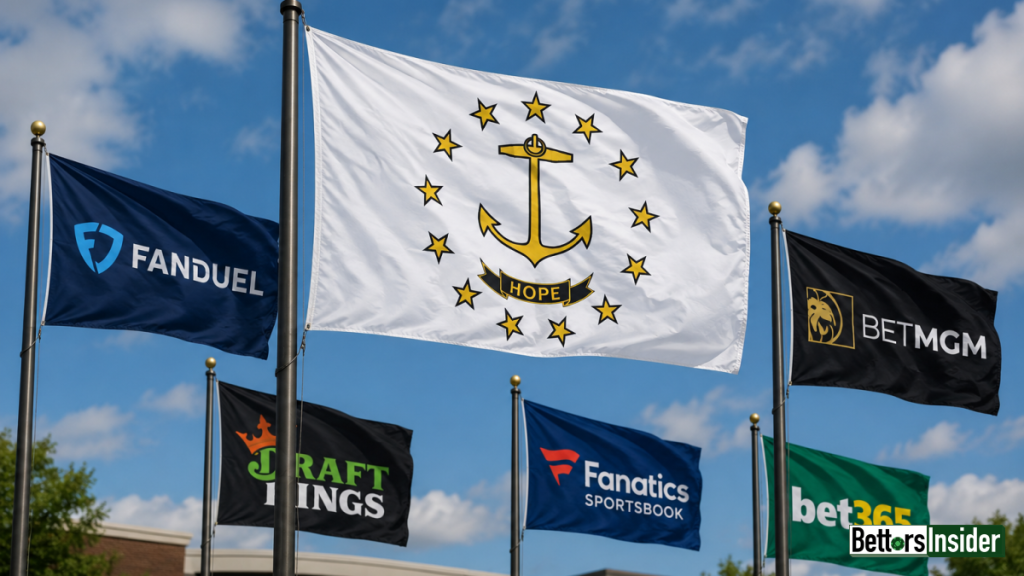

A Rhode Island Senate bill introduced by Democratic Senators Frank Ciccone, John Burke, and Stefano Famiglietti would significantly expand the state’s online and retail sports betting market by issuing four to six additional licenses to operators, with an application period that would begin January 1, 2027. Senate Bill 3118 is currently awaiting a hearing, but its introduction signals growing legislative interest in breaking up what has been a single-operator monopoly market since sports betting launched in Rhode Island in 2019.
The bill arrives at an inflection point for Rhode Island sports betting. Earlier this month, Bally’s was selected as the second-ever licensed online sports betting operator in the state, beating out Rush Street Interactive’s BetRivers for the second platform slot. Bally’s is expected to launch in November 2026, when IGT’s current exclusivity arrangement with the state expires. That two-operator market would still be one of the most restricted in the country compared to states like Massachusetts, which allows seven licensed platforms.
The 51 Percent Tax Problem
Rhode Island’s 51 percent tax rate on sports betting revenue is one of the highest in the country and is widely cited as the reason so few operators applied when the state opened applications for a second license last year. Only two companies, Bally’s and Rush Street Interactive, submitted bids, which reflects how difficult it is to build a profitable sports betting operation when half of gross revenue goes to the state. For SB 3118 to actually attract four to six additional operators, lawmakers would likely need to reduce that rate substantially.
Representative Matthew Dawson, who has advocated for market expansion, acknowledged that the tax rate would need to come down to entice national operators into the state. “As long as we get our cut, that’s the goal,” Dawson said, suggesting he would accept a lower rate in exchange for more operators and higher total handle. Whether the Senate and House can agree on a revised tax structure alongside license expansion is the central legislative question. Rhode Island sports betting remains one of the smallest markets by handle in the country, and unlocking it fully would require both more competition and a realistic tax environment for operators.