
BetMGM Slashes 2026 Revenue Guidance and Says Prediction Markets Are “Poaching” Its Customers
BetMGM missed Q1 2026 analyst estimates by 14%, cut full-year revenue guidance, and became the first major US sportsbook operator to formally name prediction markets as a financial headwind — with Kalshi estimated to have outpaced BetMGM sports revenue in the quarter.
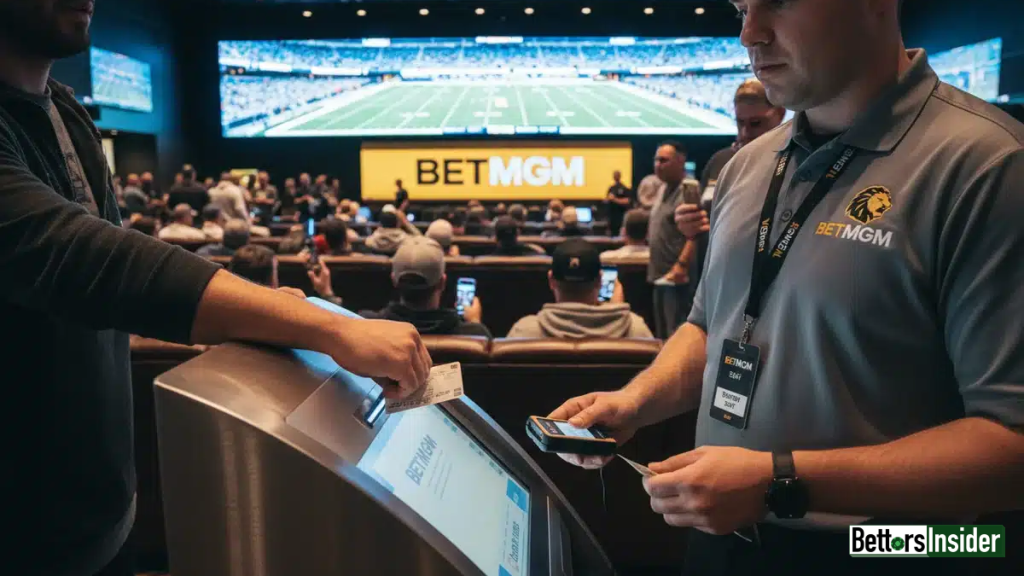

BetMGM missed Wall Street estimates by a wide margin in the first quarter of 2026, and its CEO is pointing squarely at prediction markets as a key reason why. On the company’s Q1 earnings call, CEO Adam Greenblatt accused platforms like Kalshi of running a calculated campaign to poach licensed sportsbook customers — and for the first time, a major US operator put a formal financial number on the damage. The results raise uncomfortable questions for the entire regulated sports betting industry.
The Numbers Behind the Miss
BetMGM reported Q1 2026 net revenue of $696 million, up 6% year over year but landing 14% below the analyst consensus of approximately $810 million. The shortfall was concentrated in online sports betting, where revenue came in at $203 million — up just 4% year over year on handle of $4.2 billion (up 3%) and a hold rate of 8.8%.
iGaming held up better, generating $481 million in the quarter, a 9% increase year over year. But the sports betting side of the business is showing stress, and the user count makes that clear: average monthly active users fell 9% year over year to approximately 597,000, with online sports MAUs down 16%. That said, the users who stayed were spending more — handle per active user rose 23% and net gaming revenue per active user increased 25%, which CFO Gary Deutsch characterized as a trade that is “roughly balanced.”
The company cut its full-year 2026 revenue guidance to $2.9 billion–$3.1 billion, down from a prior range of $3.1 billion–$3.2 billion. Adjusted EBITDA guidance of $300 million–$350 million was maintained but is now expected to come in toward the lower end of that range. The long-term target of $500 million in adjusted EBITDA by 2027 was reiterated.
Greenblatt Names the Culprit
Rather than attribute the user attrition entirely to organic market dynamics, Greenblatt was unusually direct. In remarks on the earnings call, he said: “This jump is largely driven by new sports betting companies buying media in the category. They call themselves prediction markets, and they are buying sports betting keywords as well as throwing money at any sports media property that will take it. They are targeting sports bettors directly in their marketing, thereby bidding up the cost of acquiring new OSB players and extending payback periods. Some of these companies even have ‘sportsbook mode’ in their product in an attempt to offer as close an experience as possible to sports betting.”
The characterization marks the first time a major US sportsbook operator has formally quantified prediction market competition as a financial headwind in public guidance. It also reflects a broader frustration building across the licensed sportsbook industry: platforms operating under a CFTC-regulated framework are competing directly for the same sports bettors while sidestepping the state-by-state licensing costs, tax obligations, and marketing restrictions that traditional sportsbooks must navigate.
Kalshi Is Already Bigger Than BetMGM in Sports
The competitive threat is not theoretical. Citizens JMP Securities estimated that Kalshi generated approximately $304.9 million in revenue from sports event contracts in Q1 2026 alone — a figure that surpasses BetMGM’s own $203 million in online sports betting revenue for the same period. BetMGM is the largest US sportsbook that does not offer a prediction market product, and by at least one measure, it is already losing the sports revenue race to a platform that has operated for a fraction of the time under a fundamentally different regulatory framework.
FanDuel, DraftKings, and Fanatics have all moved to launch prediction market products, accepting the associated regulatory risk. BetMGM has explicitly ruled out that path. The reason is straightforward: launching sports event contracts under the CFTC framework could jeopardize the company’s casino licenses in Nevada and other states. For a company whose iGaming vertical generates more than twice the revenue of its sportsbook, that is not a trade it is willing to make. You can learn more about how these platforms compare in our guide to prediction markets vs. sports betting.
Greenblatt’s Long-Term Skepticism of the PM Model
Greenblatt did not simply complain about the competition — he argued it will be self-defeating. Drawing a comparison to high-stakes poker, he suggested the prediction market user ecosystem resembles a table full of “hardcore grinders.” His argument: when platforms attract primarily sharp, high-volume traders rather than recreational bettors, recreational players lose their money too quickly and exit the platform. Over time, he contended, this erodes the long-term unit economics that make prediction market operators viable.
Whether that thesis proves out remains to be seen, but BetMGM’s stance is effectively a bet that the licensed sportsbook model — with its regulated margins, recreational-friendly product design, and broad product suite — ultimately wins on durability. For now, the company’s Q1 results suggest the short-term pain is real regardless of what happens in year three or four of the prediction market era.
Regulatory Pressure on Prediction Markets
The competitive environment is further complicated by ongoing legal challenges to prediction market sports contracts. Ohio regulators issued a $5 million fine to Kalshi. Nevada courts temporarily shut Kalshi down in that state. Massachusetts has filed suit. And the Ninth Circuit is preparing to rule on the central legal question: whether sports event contracts are legal under state gambling laws. The outcome of that ruling could significantly reshape the landscape — but until it arrives, prediction market platforms continue to operate in most US markets and continue to attract sports bettors that licensed operators would prefer to keep. For a closer look at the platform at the center of this debate, see our full Kalshi review.
Strategy Shifts and What Comes Next
In response to the pressure, BetMGM said it plans to reduce marketing spend on online sports betting in states where it only offers that product, redirecting resources toward markets where its full suite — including iGaming — is available. The logic is that customer lifetime value is significantly higher in combined sports-and-casino markets, and that fighting for OSB-only customers in states where it cannot cross-sell casino products is an increasingly poor use of capital.
BetMGM also announced a planned expansion into Alberta, Canada, with a launch scheduled for July 13, 2026. International and provincial markets with favorable regulatory structures represent one avenue for growth that is not subject to the same prediction market dynamics currently pressuring the US business.
For the broader sportsbook industry, BetMGM’s Q1 miss and its willingness to formally name prediction markets as a revenue headwind in public guidance signals a new phase of this competition. The licensed operators who accepted years of high-margin-eroding promotional spending to build their user bases now face a second front — a CFTC-regulated category that competes for the same customer with different rules and, for now, aggressively funded marketing budgets. If you are evaluating your options as a bettor, our BetMGM sportsbook review covers what the platform offers today.