
Sen. Schiff Accuses CFTC Chair of Duplicity Over Prediction Markets, Pushes Bipartisan Bill to Ban Sports Contracts
Sen. Adam Schiff warned at a Brookings Institution event that prediction markets are becoming indistinguishable from unregulated sports gambling and accused CFTC Chair Mike Selig of contradicting earlier commitments.
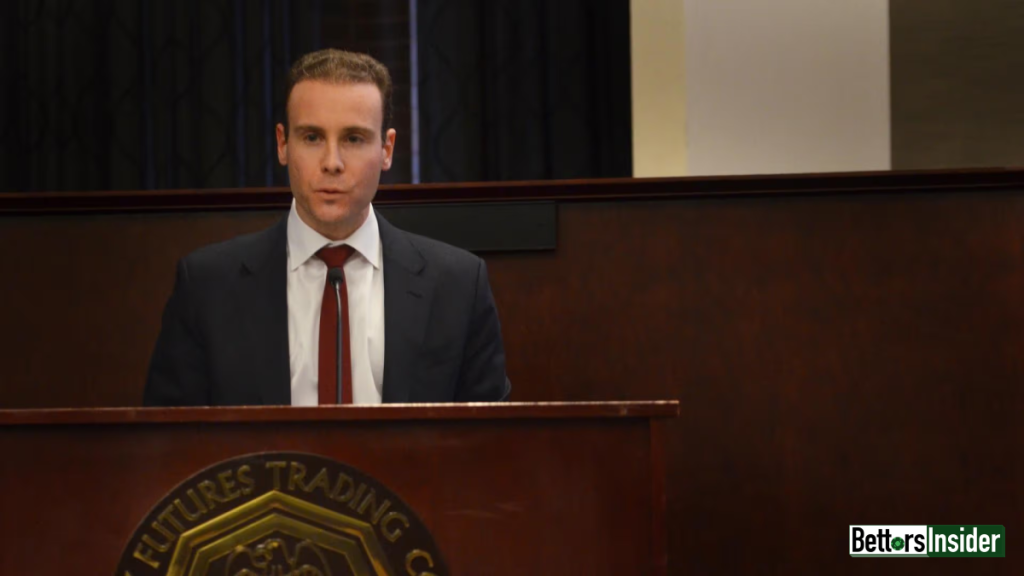

Sen. Adam Schiff (D-CA) accused Commodity Futures Trading Commission Chair Mike Selig of contradictory behavior on sports prediction markets during a Brookings Institution event on May 13, 2026, escalating the political battle over whether event-based platforms should be regulated as financial instruments or as gambling. Schiff, who sits on the Senate Agriculture Committee which oversees the CFTC, said the agency is “completely unequipped” to regulate the rapidly expanding prediction markets industry.
Speaking with Aaron Klein at Brookings, Schiff described Kalshi’s sports contracts as “pretty indistinguishable” from gaming and sports betting. He recalled asking during an earlier Senate hearing whether the CFTC would allow courts to resolve the jurisdiction dispute over sports event contracts, saying Selig committed to that approach. “Well, he’s done the exact opposite, which I find very duplicitous. He’s leading the CFTC down this path to fully embrace prediction markets,” Schiff said.
The Legislative Push
Schiff and Sen. John Curtis (R-UT) introduced bipartisan legislation in March 2026 that would prohibit CFTC-registered platforms from offering sports-related contracts and casino-style event contracts while preserving legitimate commodity and risk management markets. The bill would return authority over sports betting-style contracts to states and tribal governments, a position backed by a coalition of nearly all state attorneys general.
Schiff cited a Wall Street Journal analysis showing that approximately two-thirds of profits on prediction market exchanges are captured by 0.1 percent of all traders. He also highlighted the age access disparity: federally regulated event contracts are generally available to users as young as 18, compared to the 21-plus standard used by most state gambling regulators. The CFTC has filed lawsuits against Arizona, Connecticut, Illinois, New York, and Wisconsin to block those states from enforcing their gambling laws against CFTC-regulated prediction market operators, and secured a preliminary injunction in Arizona.
What Comes Next
The Senate Commerce Subcommittee on Consumer Protection, Technology, and Data Privacy has scheduled a hearing on May 20, 2026 titled “No Sure Bets: Protecting Sports Integrity in America” that will place prediction markets alongside the licensed sportsbook industry in a formal Congressional setting for the first time. Several competing legislative approaches are currently in play, including the “Prediction Markets Security and Integrity Act” and the “STOP Corrupt Bets Act,” creating a complex legislative environment heading into the second half of 2026. For users monitoring how these policy changes could affect their access to legal wagering platforms, our guide to prediction markets vs. sports betting explains the key regulatory distinctions. A side-by-side look at the leading platforms is available through our prediction market apps review.