
Federal Judge Permanently Blocks Arizona From Prosecuting Kalshi — A Big Legal Win for Prediction Markets
U.S. District Judge Michael Liburdi issued a permanent injunction on May 5 blocking Arizona AG Kris Mayes from pursuing criminal charges against Kalshi, ruling that federal law preempts state gambling statutes as applied to CFTC-regulated exchanges.
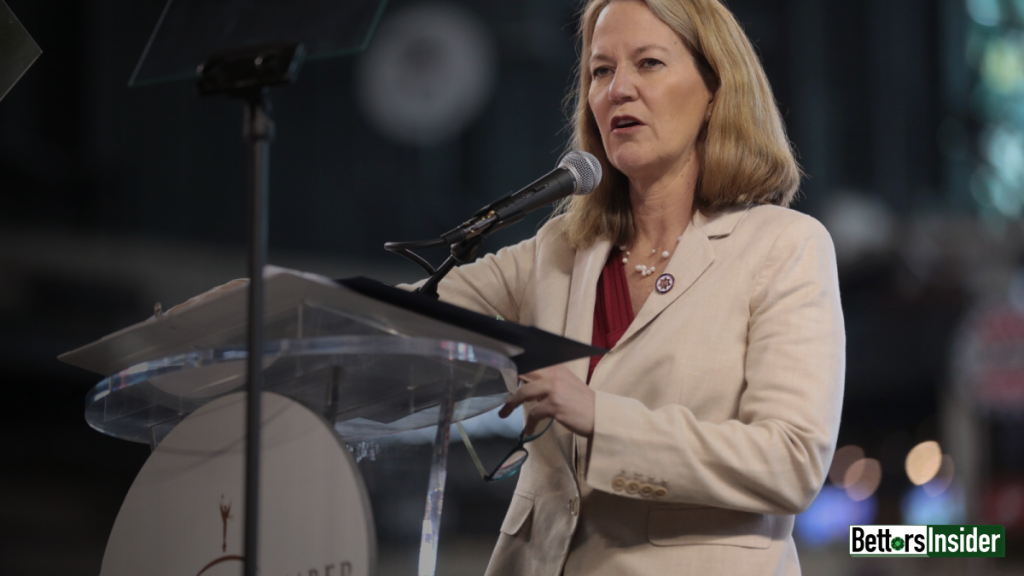

A federal judge has permanently blocked Arizona from pursuing criminal charges against prediction market exchange Kalshi, handing the Commodity Futures Trading Commission its most decisive legal victory yet in the ongoing battle over whether states have the authority to regulate federally licensed prediction market operators. U.S. District Judge Michael Liburdi issued the permanent injunction on May 5, making it the first district-level final ruling of this cycle and significantly raising the stakes for any state still pursuing similar enforcement actions.
How the Arizona Case Began
Arizona Attorney General Kris Mayes filed criminal charges against Kalshi on March 17, accusing the company of operating an illegal gambling business and accepting wagers on elections — a practice barred under Arizona state law. The indictment included 20 misdemeanor counts: four tied to election wagering on the 2028 presidential race, the 2026 Arizona gubernatorial race, the 2026 Arizona Republican gubernatorial primary, and the 2026 Arizona Secretary of State race, and additional counts tied to sports contracts Mayes argued constituted illegal gambling.
Arizona became the first state in the country to file criminal charges against Kalshi, taking an approach that stood out for its severity. Other states — Connecticut, Illinois, New Jersey — had sent cease-and-desist letters or pursued civil enforcement. Mayes chose the criminal route. Kalshi denied wrongdoing and argued that its products are federally regulated derivatives, not gambling, and that the Commodity Exchange Act preempts state gambling laws as applied to CFTC-regulated designated contract markets.
The Federal Government Steps In
The CFTC entered the case aggressively. The agency filed a complaint against Arizona, Connecticut, and Illinois on April 2 — a consolidated action arguing that the Commodity Exchange Act expressly preempts state gaming laws as applied to CFTC-regulated markets. CFTC Chair Michael Selig had been outspoken in his support for Kalshi, calling Arizona’s use of state criminal law against a federally compliant company “a dangerous precedent” and “an acceptable tactic to circumvent federal law.”
Judge Liburdi had initially issued a temporary restraining order in April, pausing the criminal case while the preemption question was litigated. His ruling on May 5 converted that temporary order into a permanent injunction — a different legal posture entirely. A TRO pauses a proceeding. A permanent injunction terminates it at the district court level.
The order stated directly: “The Court concludes that federal law preempts state gambling laws insofar as they seek to regulate derivatives exchanged on markets regulated by the CFTC.” Kalshi’s attorney Robert Denault described the ruling as a confirmation that “federal law is supreme” under the Constitution.
What the Ruling Actually Does — and Doesn’t Do
Judge Liburdi’s permanent injunction ends Arizona’s criminal case as it stood in district court. Arizona cannot proceed with the charges filed by Mayes in Maricopa County Superior Court. The state is expected to appeal to the Ninth Circuit, which was already set to hear arguments on a related preemption conflict involving Nevada. That appeal, once filed, will carry significant weight — the question of whether CFTC jurisdiction truly displaces state gambling law will not be fully settled until it works through the appellate courts.
The ruling also does not address every pending legal question surrounding prediction markets. It does not settle the broader question of whether election wagering specifically can be banned under other federal statutes, nor does it resolve cases in other states. Washington State Attorney General Nick Brown, for example, filed a separate civil lawsuit against Kalshi shortly before the Arizona ruling, seeking a permanent injunction and restitution of player losses under different legal theories.
Implications for the Rest of the Map
The significance of Liburdi’s ruling lies primarily in its finality at the district level. Prior wins for Kalshi — including a preliminary injunction from the Third Circuit blocking New Jersey’s enforcement action — were procedural pauses. A permanent injunction is a merits ruling, even if it remains subject to appellate review. That gives the CFTC considerably stronger footing as it pursues similar actions in Connecticut, Illinois, and elsewhere.
For every state attorney general watching this space, the message is clear: building a case against a CFTC-regulated exchange on the theory that state gambling law applies is an uphill legal battle that now has a district-level ruling against it. That does not make future enforcement impossible, but it changes the calculus considerably. The question of whether prediction markets are legal in a given state has never been more directly tested — and the federal courts are beginning to provide answers. For those using Kalshi, the platform continues to operate under its CFTC license regardless of the state-level legal battles surrounding it.