
158 Years of the Belmont Stakes: Records, Legends, and Why 2026 Is Unlike Any Before It
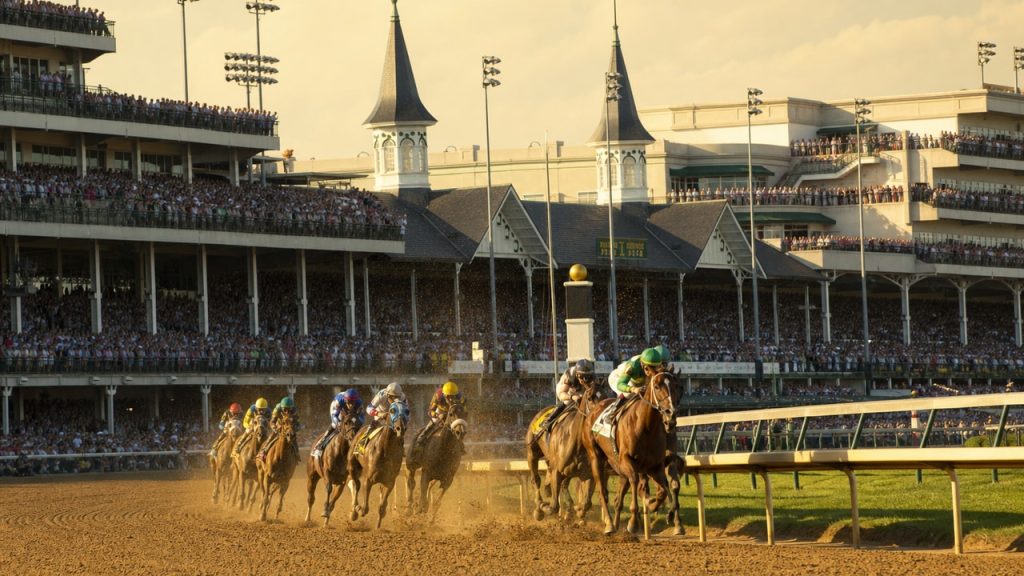

Tomorrow, June 6, 2026, the Belmont Stakes turns 158 years old. That’s not a misprint. While the Kentucky Derby gets the roses and the Preakness gets the Black-Eyed Susans, the Belmont Stakes gets something neither of those races can claim: seniority. It is the oldest of the three, and it has spent most of its existence quietly accumulating one of the most layered, dramatic, and occasionally heartbreaking records in American sports. This year, the race runs at Saratoga Race Course for the third and final time before Belmont Park reopens — closing out a once-in-a-generation chapter of displacement that racing fans will talk about for decades. If you’re betting the 158th Belmont Stakes, knowing the history is part of the homework.



The Oldest of the Three — By a Long Shot
The Belmont Stakes was first run on June 19, 1867, eight years before the Kentucky Derby and six years before the Preakness. It was named after August Belmont Sr., a powerful New York financier and one of the most influential figures in American horse racing at the time. The inaugural winner was Ruthless, a filly who took home a first-place purse of $2,500. That same race now carries a $2 million purse, with $1.2 million going to the winner — not a bad return on 158 years of tradition.
The Belmont is considered the fourth-oldest stakes race in North America, trailing only a handful of Canadian events that predate it. What sets it apart from its Triple Crown siblings isn’t just age — it’s the sheer weight of everything that’s happened under its name. No other race in America can claim a record quite like it.
The Distance Question: Why 1¼ Miles at Saratoga
When most people think of the Belmont Stakes, they think of a mile and a half — the longest race of the Triple Crown, the one that grinds down horses who weren’t built for it. That’s why it earned the nickname “The Test of the Champion.” A horse that can win the Kentucky Derby, the Preakness, and then gut out a mile and a half at Belmont has genuinely done something extraordinary.
But Saratoga’s main track is only a 1⅛-mile oval, which made the traditional distance impossible. For 2024, 2025, and 2026, the race has been contested at 1¼ miles — making this only the ninth time in history the Belmont has been run at that distance. The first eight instances were spread across various eras, including a stretch in the 1890s. When Belmont Park reopens after its massive renovation — the most significant reconstruction of the facility since the 1960s — the race returns to its iconic mile and a half home. This year is the last time any of us will watch a Belmont Stakes at Saratoga.
The Shadow of Secretariat
No conversation about the Belmont Stakes gets very far before arriving at June 9, 1973. That afternoon, Secretariat did something that no horse has come close to replicating in the 53 years since. He won by 31 lengths — thirty-one — in a world-record time of 2:24 flat. The record has never been threatened. What makes it even more remarkable is that Secretariat also holds the Belmont record for the fastest fractional times at the half-mile, three-quarters of a mile, one mile, and one and a quarter miles. He wasn’t just fast at the finish; he got faster as the race went on. Most horses fade. He accelerated.
For anyone betting the 158th Belmont with a sharp eye on pace and fractions, Secretariat’s run is a useful reminder that Belmont times tell you something the naked eye can’t. The track rewards horses with genuine stamina and the ability to sustain speed — qualities that show up plainly in the fractions, if you know where to look.
The Heartbreakers: Triple Crown Bids That Died at Belmont
Of the 13 horses that have swept the Triple Crown, the Belmont was always the final hurdle. But the race has also become the graveyard of some of the most anticipated moments in horse racing history. The failures are as much a part of its identity as the victories.
In 2002, War Emblem arrived at Belmont as a legitimate Triple Crown threat and stumbled badly at the start, losing any chance before the field had even settled into stride. In 2004, Smarty Jones was so heavily favored — and so beloved — that a record 120,139 fans packed into Belmont Park to watch him make history. He lost to 36-1 longshot Birdstone. In 2008, Big Brown was pulled up by his jockey after the final turn, finishing last. The Belmont has broken more Triple Crown bids than any other race in the sport. It does not care about narrative.
After Justify swept the Triple Crown in 2018 following American Pharoah’s 37-year drought-ending run in 2015, it has been eight straight years without a Triple Crown bid. No horse has won all three since Justify. The streak continues heading into 2026.
The Betting Line on 158 Years of History
Here’s a number worth keeping in mind before you place your bets: the favorite has won 66 of 157 Belmont Stakes, a 42 percent win rate. That’s meaningful. Four of the last eight winners came in as the betting favorite. The Belmont does not have the chaos factor of the Kentucky Derby, where a massive field and a short prep cycle create genuine volatility. At Belmont, the best horse often runs like the best horse. Handicappers who respect the chalk have done reasonably well here over time. If you’re looking for a starting point for this year’s wagering, check out the FanDuel promo code, the DraftKings promo code, or the BetMGM promo code to maximize your value heading into race day.
On the training side, Woody Stephens won five consecutive Belmont Stakes from 1982 through 1986 — a record that appears untouchable. Todd Pletcher has won four times. Bill Mott took it in 2025. The Belmont rewards trainers who understand how to condition a horse for a long, grinding race, and that expertise shows in the win totals.
What’s at Stake on June 6, 2026
Cherie DeVaux trained Golden Tempo to a Kentucky Derby victory in May. If he crosses the wire first on Saturday, he becomes the 13th horse to complete the Kentucky Derby-Belmont double outside of a full Triple Crown sweep — Sovereignty did it last year — and DeVaux would become only the second woman to train a Belmont Stakes winner. Jena Antonucci was the first, with Arcangelo in 2023. Back-to-back history-making runs from a trainer would be a story that outlasts the result on the tote board.
And then there’s the venue itself. Saratoga is intimate by Belmont standards — nothing close to the 120,139 who crammed in for Smarty Jones in 2004. But what it lacks in scale it makes up for in atmosphere. The winner will be draped in a blanket of approximately 700 white Colombian carnations, a tradition that has followed the Belmont Stakes across boroughs and eras. After this year, the race goes home. Belmont Park reopens. The Saratoga chapter closes.
Fans watching on June 6, 2026 are seeing something that will not happen again — the Belmont Stakes, at a track it was never supposed to call home, for the last time. That’s not just a historical footnote. That’s the whole story.