
SEC Weighs Reviving Transfer Portal Sit-Out Rule as Lane Kiffin Rips Proposal and Legal Fight Looms
The SEC is considering reviving its pre-2021 rule forcing transferring athletes to sit out a year, and LSU's Lane Kiffin says it would just hand talent to rival conferences.
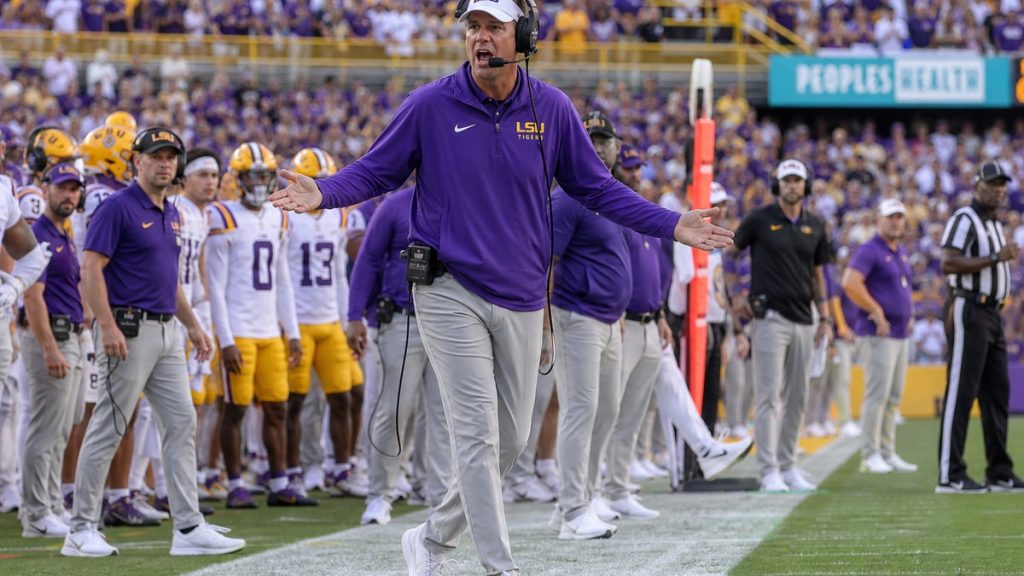

The SEC is weighing a return to one of its most restrictive transfer policies, considering a rule that would force athletes to sit out a year if they transfer between conference schools, sources told On3 on Thursday. The proposal, which would roll back a 2021 change that granted immediate eligibility for intraconference transfers, is already drawing fire from inside the league — most loudly from LSU head coach Lane Kiffin, who tore into the idea on his Thursday night radio show.
The policy under discussion would effectively revive the pre-2021 SEC transfer framework, when a player leaving one SEC program for another had to sit out a full season before taking the field. The conference scrapped that restriction in 2021 as the broader transfer portal era accelerated across college football. Now, with portal poaching and in-season tampering among coaches a growing point of friction, at least one SEC school source told On3 that reinstating the sit-out requirement is being floated as a way to curb that movement — though another source cautioned it could leave SEC programs unable to pull proven talent out of the portal from their own conference rivals.
Kiffin Calls the Proposal a Gift to Rival Conferences
Kiffin did not mince words when addressing the proposal on his coaches show Thursday evening. “That would be terrible. I can’t imagine a worse decision to be made,” Kiffin said, according to The Advocate’s Jon Blau. His argument centers on what the rule would actually accomplish: rather than keeping players inside the SEC ecosystem, he believes it would push them straight into the arms of the Big Ten, ACC and Big 12.
“When a kid goes to transfer from the SEC, he can’t go in the SEC. Well, he’s going to go to other conferences,” Kiffin said. “So we would just be handing away a lot of players every year and limiting them in that they can’t go to the other 15 SEC schools that they’ve grown up fans of, or maybe in the same area where they’re from. They’d be forced to go to other conferences and play against us and play for other conferences.” He added that other leagues “would celebrate that rule,” and compared the proposal to the NFL barring AFC free agents from signing with other AFC teams, restricting them to the NFC instead.
The timing is notable. The rule being discussed traces back to a pre-2021 SEC policy, and the broader national landscape has shifted dramatically since then — the NCAA itself moved to guarantee immediate eligibility for one-time transfers, then extended that protection to multi-time transfers in the spring of 2024 after a federal court injunction out of West Virginia made the older restriction legally untenable. SEC presidents are expected to meet next week to discuss the proposal further, with no final decision yet announced.
Betting Markets Watch for Antitrust Fallout and Roster Volatility
Beyond the locker room reaction, the proposal carries real implications for how oddsmakers and futures markets price SEC teams heading into next season — and it arrives with a legal cloud attached. CBS Sports noted on October 8 that any reinstated sit-out requirement would almost certainly draw a court challenge, pointing to the precedent set in the NCAA’s own transfer-rule fight. In December 2023, attorneys general from seven states sued the NCAA over its one-year sit-out restriction on multi-time transfers, alleging it violated federal antitrust law under the Sherman Act. The Department of Justice joined that suit in January 2024, and by May of that year the NCAA had agreed to a consent decree barring it from enforcing that rule — or adopting any similar restriction — going forward. A conference-level rule singling out intraconference movement could invite the same scrutiny.
For futures bettors and oddsmakers, the uncertainty itself is the story. Preseason and national-championship futures markets are built heavily on expected roster continuity, and a rule that could either freeze SEC rosters in place or — per Kiffin’s warning — bleed talent out to rival conferences cuts both ways on how those markets get priced. If the rule discourages intraconference movement and stabilizes rosters at the sport’s deepest conference, that could reinforce the SEC’s standing atop CFP futures and win-total markets, since continuity at powerhouse programs tends to be priced as a strength. But if Kiffin’s prediction holds and displaced players instead land at Big Ten, ACC or Big 12 programs, that migration could chip away at the talent gap oddsmakers currently bake into the SEC’s favorite status in conference and national futures, while nudging up the markets for programs outside the SEC footprint.
There’s also a timing wrinkle for the futures market itself: the next transfer portal window opens January 4 for a 10-day stretch, meaning any rule change — or the legal challenge that follows it — would land in the middle of the exact period when rosters for next season start taking shape. Until the SEC presidents actually vote, bettors and bookmakers alike are left pricing in ambiguity rather than a settled rule, with the conference’s own internal debate now a variable in how its teams get valued heading into the 2027 season.