
Milwaukee Stuns Auburn With 10-Run Lead Before Weather Halts NCAA Tournament Opener at Plainsman Park
Milwaukee spotted itself a 10-run lead against the No. 4 national seed before a lightning delay stopped play — and now Auburn is staring down one of college baseball's most improbable comebacks.
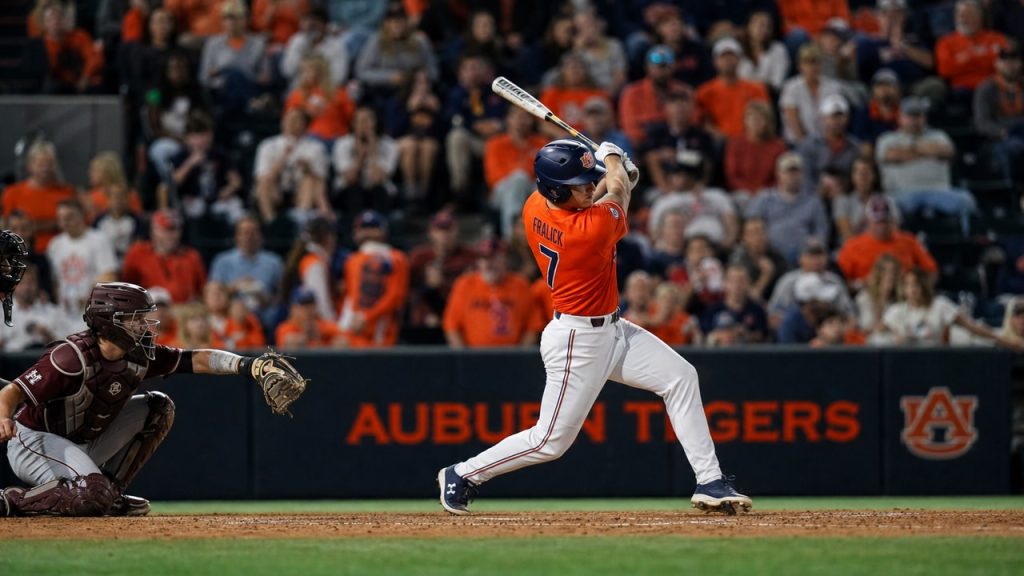

The Auburn Tigers, the No. 4 overall seed in the 2026 NCAA Baseball Tournament, found themselves in an almost unthinkable situation Friday afternoon as the Milwaukee Panthers — a team that finished the regular season with a 25-31 record — jumped out to a 10-0 lead before a lightning delay halted play at Plainsman Park in the sixth inning. When the delay hit, Milwaukee held an 11-5 advantage, forcing one of college baseball’s marquee programs to contemplate a historic comeback just to survive opening day of their own regional.
Auburn entered the 2026 NCAA Tournament with a 38-19 record and as the No. 4 national seed, having earned that standing on the back of a powerful SEC schedule. The Tigers went 17-13 in conference play and recorded strong RPI numbers, ranking third in the country by that metric. Head coach Butch Thompson’s squad was viewed as a dominant force hosting the Auburn Regional, paired with UCF, NC State, and Milwaukee — the Horizon League champion — in what was expected to be a manageable bracket.
Milwaukee’s Blitz Rocks Auburn Ace Jake Marciano
Auburn turned to ace Jake Marciano on the mound to open the tournament, a move that made obvious sense given the stakes and the opponent. What followed was anything but ordinary. Milwaukee jumped on Marciano immediately, plating four runs in the first inning on a three-run home run from Braydn Horn that landed in left field. The Panthers continued to batter the Auburn starter, who allowed six earned runs on eight hits before being pulled in the second inning without recording an out — the worst outing of his Auburn career.
The damage did not stop with Marciano’s departure. By the fourth inning, Milwaukee had extended its lead to 10 runs on a three-run blast from Charlie Marion into center field. At that point, Auburn had recorded just one hit across the first three innings against a Milwaukee pitching staff that entered the tournament with an ERA of 7.99 — the kind of number that signals vulnerability, not dominance. The Tigers, meanwhile, were being shut down by a team that statistically had no business silencing them.
Auburn Battles Back Before Lightning Stops Play
What began as a potential blowout took a different shape in the middle innings as Auburn’s powerful lineup finally began to assert itself. In the fourth and fifth innings combined, the Tigers plated five runs to cut the deficit to 11-5. Ethan Bingaman delivered the biggest blow of the comeback attempt with a three-run home run to left field, getting Auburn on the board and shifting the energy at Plainsman Park. One inning later, Taylor Belza scored from third on a fielder’s choice, and Chase Fralick added his 15th home run of the season with a shot into right field to keep the momentum going.
Then came the lightning delay. As the game entered the bottom of the sixth with Auburn down six runs, a storm moved into the area, stopping play and giving the Tigers a pause they badly needed. The largest comeback in NCAA Regional history belonged to LSU, who overcame a seven-run deficit against Kennesaw State in 2022 — a number that Auburn, down six, was in reach of surpassing if it could string together a strong finish.
What’s at Stake for Auburn’s Tournament Run
The context surrounding this game matters significantly. Auburn is among the most dangerous offensive teams in college baseball this season. The Tigers have five everyday starters — Eric Guevara, Chase Fralick, Chris Rembert, Bub Terrell, and Ethan Bingaman — who each hit over .300 with at least 40 RBIs and an OPS above .900 during the regular season. Brandon McCraine led the team with a .347 batting average. The roster was built to do exactly what it is now being asked to do: come from behind against unlikely opposition.
Milwaukee, for its part, deserves credit for executing a game plan that completely disrupted Auburn’s routine. The Horizon League champion entered as massive underdogs at +1000 on the moneyline, and the Panthers’ willingness to attack Marciano early and manufacture big innings spoke to a team playing loose and with nothing to lose. Two three-run home runs in the opening innings served as a blueprint for how a lower-seeded team can neutralize a superior opponent by working quickly and staying aggressive.
If Auburn fails to complete the comeback, the loss drops them into the loser’s bracket where they would need to win multiple games over the remaining days of the regional simply to advance. That is not an insurmountable situation for a team with this lineup, but it creates a grinding path through the bracket that was not part of anyone’s expectations when the Tigers were seeded among the nation’s elite. The next opponent in the loser’s bracket would come Saturday, with Auburn needing to win three consecutive games without another loss to advance to the Super Regionals.
For Milwaukee, completing this victory would be one of the more stunning upsets in recent NCAA Tournament history given the run differential and the context of Auburn’s resources, facilities, and talent level. Whether the Panthers finish the job after the delay is resolved will determine whether this becomes a cautionary tale for the home team or one of the sport’s great first-round stories.